


How to Explain Death to a Child, by Age
There's no perfect script to explain death to a childn, but there is a wrong direction: softening the truth so much that a child is left confused, or waiting so long that they hear it from someone else first. Children are more resilient with clear, honest, age-appropriate language than most adults expect.
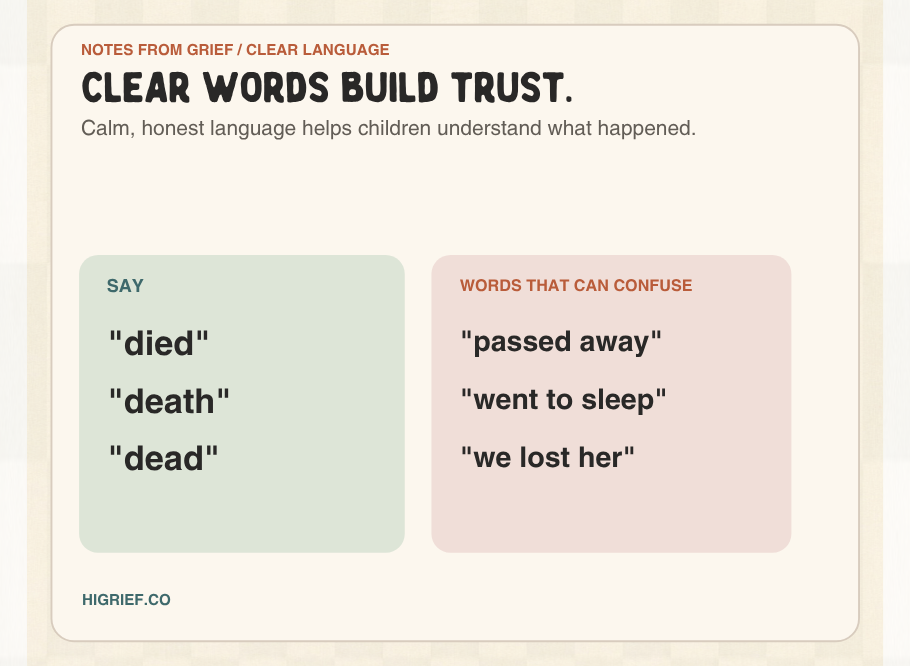
A few things that hold true across every age: Use the real words, "died," "death," "dead," instead of "passed away," "went to sleep," or "we lost her." Euphemisms can genuinely frighten young children (a child told grandpa "went to sleep" may become afraid of bedtime). Say it in a calm, private moment, ideally from someone the child trusts. And expect to say it more than once, children process big information in pieces, often circling back to the same questions days or weeks later.
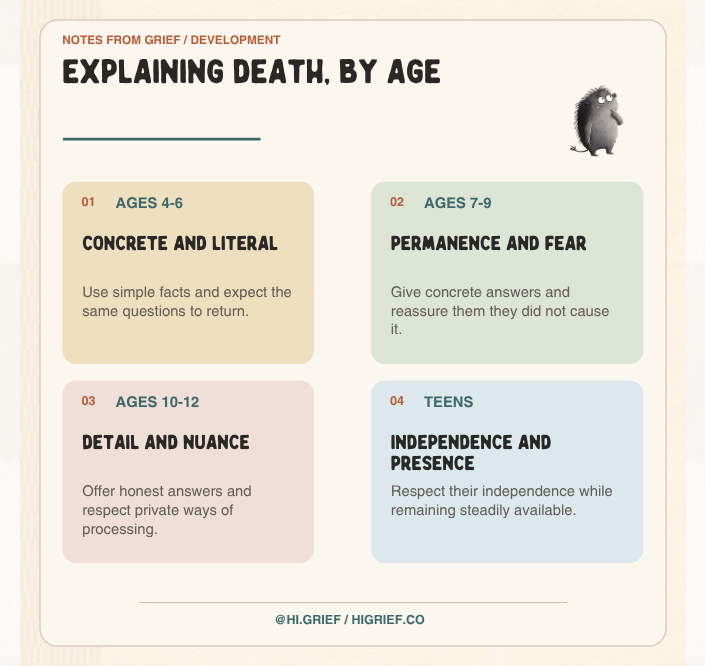
Ages 4-6: Young children think concretely and often literally. They may ask what seem like blunt or startling questions ("Can she still eat?" "When is he coming back?") - this is curiosity, not coldness. Keep explanations short and factual: "Grandma's body stopped working. That means she died. She's not going to come back, and that makes us really sad." Avoid abstract language like "she's in a better place" or "he's watching over you," which can be confusing or even alarming to a literal thinker. It's normal for a child this age to ask the same question repeatedly, or to seem to "forget" and ask again weeks later - that's part of how they build understanding over time, not a sign something's wrong.
Ages 7-9: Kids this age are starting to understand that death is permanent and universal - that it happens to everyone eventually, including people they love and even themselves. That realization can bring up real fear, sometimes about a parent's safety or their own. Give honest, concrete answers, and don't be afraid to say "I don't know" to the questions that don't have answers. This is also an age where guilt shows up - a child might quietly believe something they did or said caused the death. Naming that possibility directly ("This is not something you caused, even if you were upset with them recently") can be a relief they didn't know how to ask for.
Ages 10-12: Preteens can handle more detail and more nuance, including some of the medical or circumstantial facts, if they ask. They may want privacy to process rather than talking it through right away, and that's a valid way to grieve - not a sign of avoidance. Keep the door open without forcing conversation: "I'm here whenever you want to talk about this, or if you just want company."
Teens: Teenagers often grieve more like adults, but with less life experience to draw on and, often, less patience for being managed. They may push away support at the exact moments they need it most, throw themselves into distraction, or grieve in bursts between ordinary teenage life. Respect their need for some independence in how they process this, while staying visibly, reliably present.
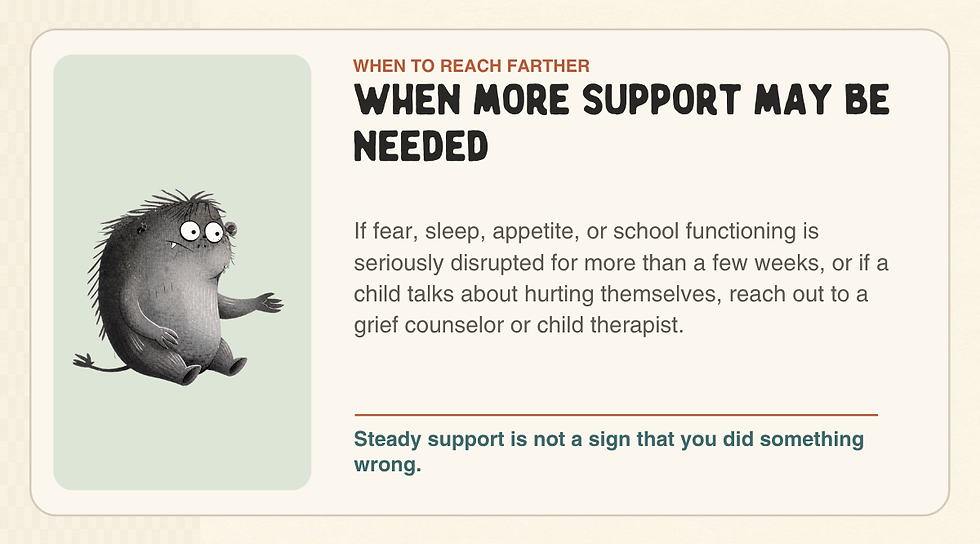
Across every age: if a child's fear, sleep, appetite, or ability to function at school is seriously disrupted for more than a few weeks, or if they express thoughts of hurting themselves, that's a signal to bring in a grief counselor or child therapist - not a sign that you've done something wrong.


Comments