


Supporting a Child While You Are Grieving Too
When you're grieving the same loss as your child — a spouse, a parent, a shared family member or pet — you're being asked to support someone else through pain while managing your own. This is genuinely difficult, and there's no need to pretend otherwise.
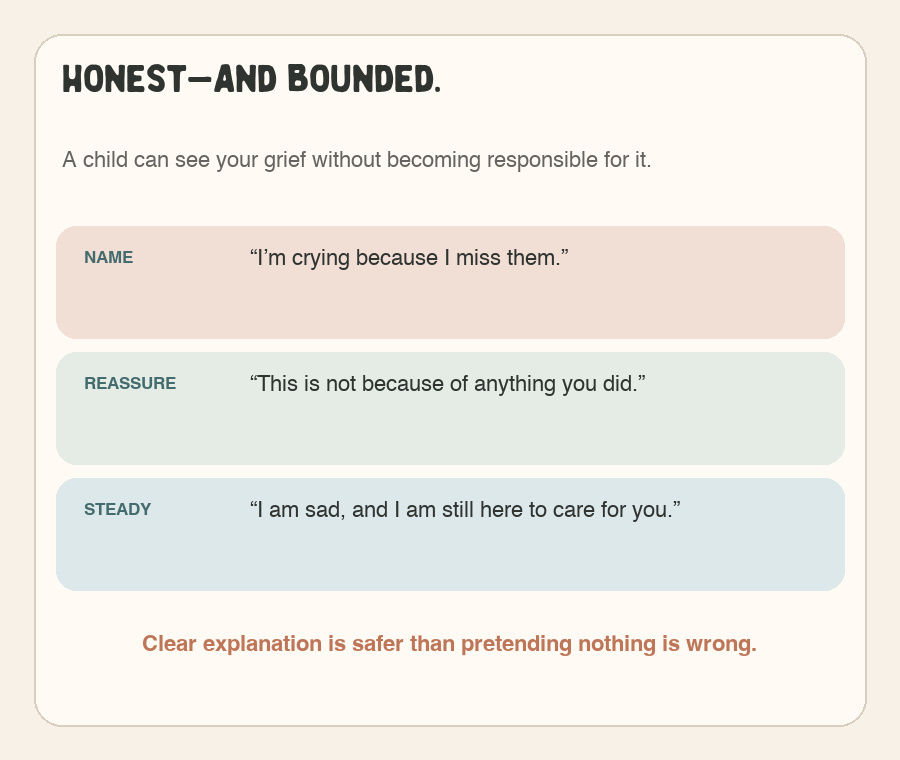
You don't have to hide your own grief to protect your child. Children benefit from seeing that grief is survivable, including in the adults they depend on. Age-appropriate honesty — crying in front of a child, briefly explaining that you're sad too — models healthy grieving far better than a performance of constant strength.
There's a difference between sharing your grief and burdening a child with it. It's healthy for a child to see you cry and know you're sad; it's not their job to manage your emotional state, provide comfort you should be seeking from other adults, or serve as your primary support system. If you notice a child trying to take care of you, gently redirect: "You don't have to take care of me. That's not your job."

Line up your own support separately from your child's. A therapist, a support group, or trusted friends and family can give you a space to process your own grief fully, which in turn makes it more sustainable to show up for your child without running on empty.

Give yourself permission to have harder days without apologizing constantly for them. A brief, honest explanation — "I'm having a hard day today, and it's not because of anything you did" — is enough. Children don't need elaborate reassurance as much as they need clarity that your mood isn't their responsibility.

Recognize that your grief and your child's grief may move on different timelines. You might feel ready to talk about the loss on a day your child wants silence, or vice versa. Neither of you is grieving incorrectly; you're simply two people moving through the same loss at your own paces.
Accept practical help when it's offered, and ask for it when it isn't. Meals, childcare, errands, or simply someone to sit with you for an hour can free up the emotional and physical capacity you need to be present for your child during a period when your own resources are genuinely limited.
If you're struggling to function, that's worth addressing for your own sake, not just your child's. A parent or caregiver's untreated grief, depression, or overwhelm affects the whole family. Seeking support for yourself is one of the most direct ways to support your grieving child, too.


Comments