


Why Grief Can Return Months or Years Later
Updated: Aug 12
Understanding why grief returns months years later can help caregivers respond with patience. It's one of the more surprising patterns in childhood grief: a child who seemed to be doing well, sometimes for a long stretch, suddenly grieves hard again — over something that, on the surface, looks unrelated to the original loss.
Children re-grieve the same loss at each new developmental stage. As a child's understanding of death and relationships matures, they often revisit an old loss with new eyes — a seven-year-old's understanding of "Dad died" looks very different from a twelve-year-old's, and different again from a teenager's. Each new stage can bring a fresh wave of grief for the same original loss.

Grief bursts can be triggered by seemingly small, unrelated things. A song, a smell, a school assignment about family, a particular season, or nothing identifiable at all can bring grief rushing back with an intensity that surprises both the child and the adults around them. This is one of the most well-documented and normal patterns in grief at any age.

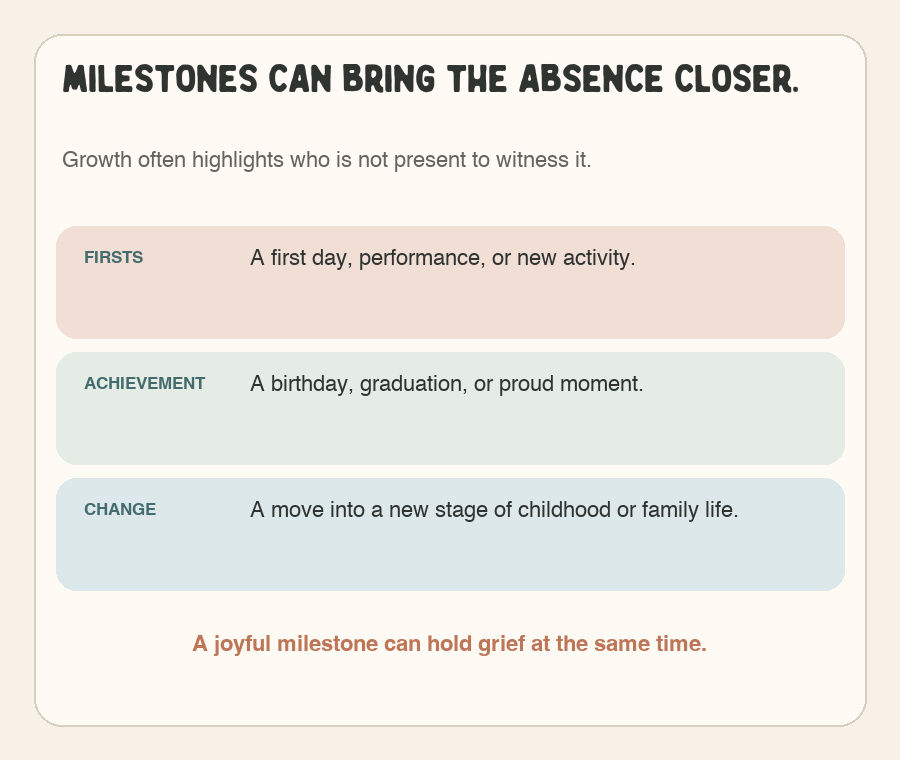
Milestones the person is missing often trigger a resurgence. Graduations, first days of school, sports achievements, or other markers of growth can bring a sharp reminder that the person isn't there to see them, even years after the death, and even when the child has otherwise seemed to be doing fine.
A return of grief isn't a sign that earlier support failed, or that something is wrong now. It's easy for caregivers to worry that a resurgence means they missed something the first time around. More often, it simply means the child is encountering the loss again from a new vantage point — which is exactly what should be expected over the course of a childhood.
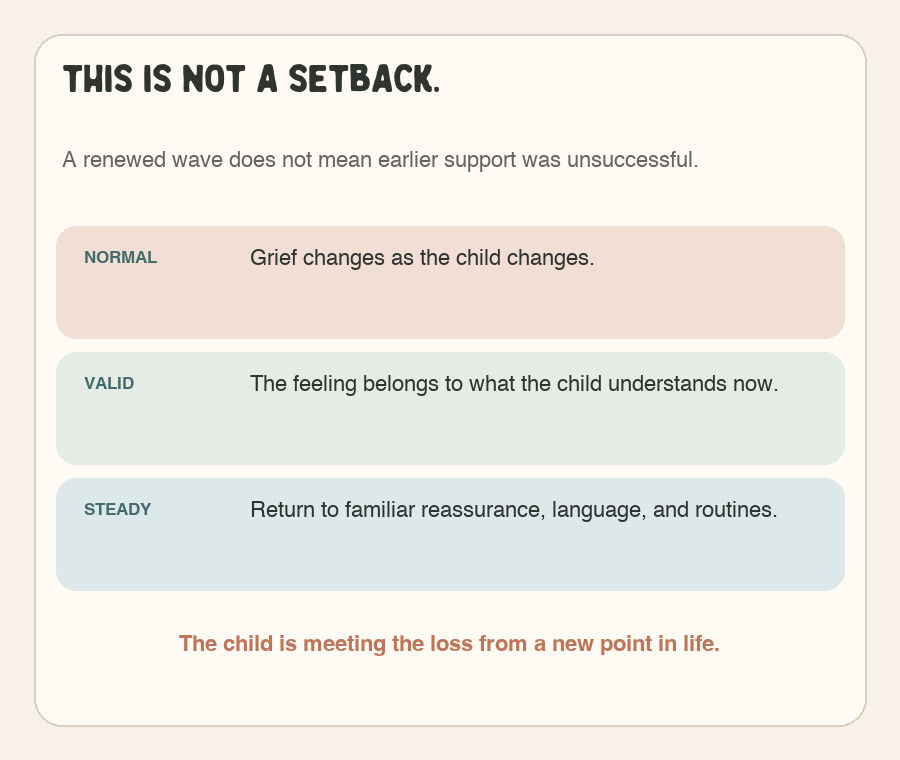
Respond to a resurgence the same way you'd respond to fresh grief: with honesty, presence, and patience. There's no need to reintroduce professional support automatically, but it's worth checking in about what brought the feeling up, and reassuring the child that missing someone again doesn't mean anything is going backward.

If a resurgence is unusually intense, prolonged, or interferes significantly with daily life, that's worth a conversation with a grief counselor — not because the grief itself is unusual, but because ongoing support can help a child build tools for the next time it happens, since for many people, it will happen again.


Comments