


Helping a Child Grieve After a Major Move or School Change
Updated: Aug 12
A move, even a positive one, can represent a real loss to a child — of friendships, familiar routines, a bedroom, a neighborhood, a sense of belonging that took years to build. Treating this as a legitimate grief, rather than something a child should simply get over quickly, tends to help more.
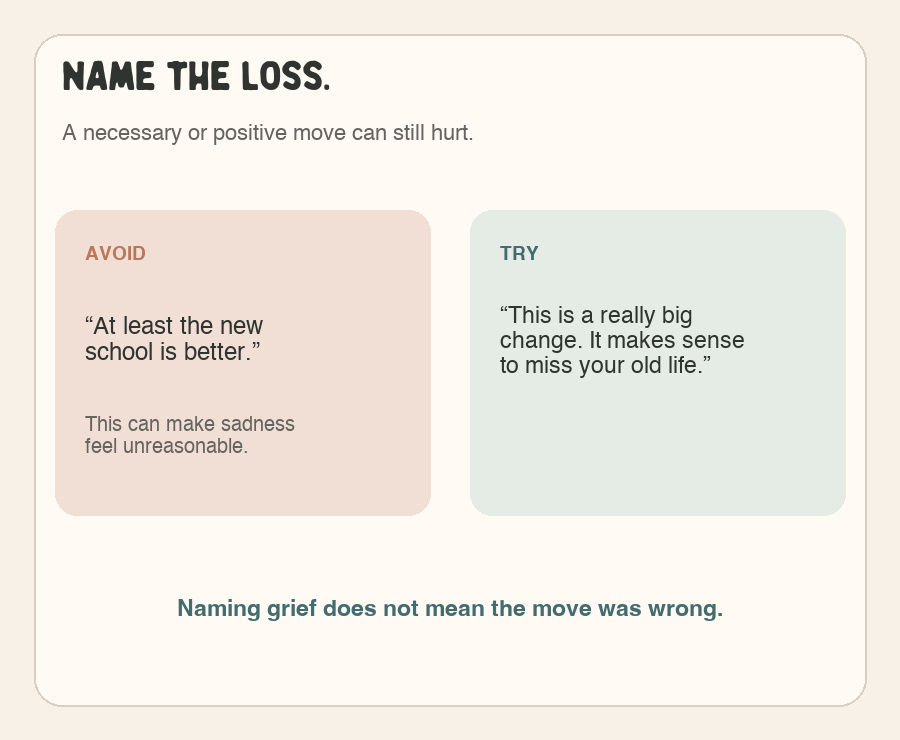
Name the loss explicitly, even if the move itself was necessary or good. "I know this is a really big change, and it makes sense to be sad about leaving your friends and your room" validates a child's experience without requiring you to apologize for a decision the family needed to make.
Give a child as much say as realistically possible in the details. They may not get a vote on whether the family moves, but choices about their new room's paint color, which belongings to bring, or how to say goodbye to their old space can restore some sense of control in a situation where they have very little.

Create deliberate space for goodbye rituals. A last visit to a favorite park, a photo of the old bedroom, a goodbye gathering with close friends, or an exchange of contact information can all help a child feel like the ending was marked, rather than simply erased by the next chapter starting.

Expect grief to resurface at unexpected moments after the move. A song that reminds them of the old house, the first time a school project requires describing "my neighborhood," or simply a quiet afternoon can bring the loss back up weeks or months later. This is a normal part of adjusting, not a sign the move was a mistake.

Be patient with a slower social adjustment than you might expect. Building new friendships takes most children longer than adults hope, and some resistance to the new school or town in the early months is common and usually eases with time, rather than indicating a lasting problem.

Keep a thread of continuity where you can. Regular video calls with old friends, a favorite family tradition kept intact, or a comfort object from the old home can all help bridge the transition, even as the child builds new connections. Helping a child grieve after move takes ongoing patience, honesty, and small acts of connection.


Comments