


Helping Military Kids Grieve a Parent Lost in Service

When a service member dies, a child loses a parent — and often much more. They may lose their home on base, their school, their friends, their community, and the identity of being a "military kid." They may watch their loss play out publicly, with flags, ceremonies, and strangers calling their parent a hero.
Military children are remarkably resilient. They're used to change and separation. But grief after a military death has unique layers, and it helps when the adults around them understand those layers.
Every military death counts. A parent may die in combat, in a training accident, by suicide, from illness, or in an accident at home. Children grieving any of these losses deserve the same honor and support. Organizations like TAPS (the Tragedy Assistance Program for Survivors) support all families grieving a military or veteran loved one, regardless of how or where the death happened.
Deployment can make death harder to believe. Children who are used to a parent being away for months may struggle to accept that this time, they won't come home. A child may say, "Daddy's just on a long deployment." This isn't denial in a worrying sense — it's how their brain is trying to make sense of something unfamiliar. Gently and repeatedly offer the truth: "Daddy died. He isn't deployed. He won't be coming home, and we miss him so much."

Prepare them for public ceremonies. Military funerals can include flags, uniforms, rifle volleys, the playing of Taps, and the folding and presenting of the flag. These can be deeply meaningful — and startling for a child who isn't prepared. Explain ahead of time what will happen and why: "There will be loud sounds, like fireworks, to honor Mommy. Then soldiers will fold a flag and give it to our family." Let children know it's okay to cover their ears, hold a hand, or step out.
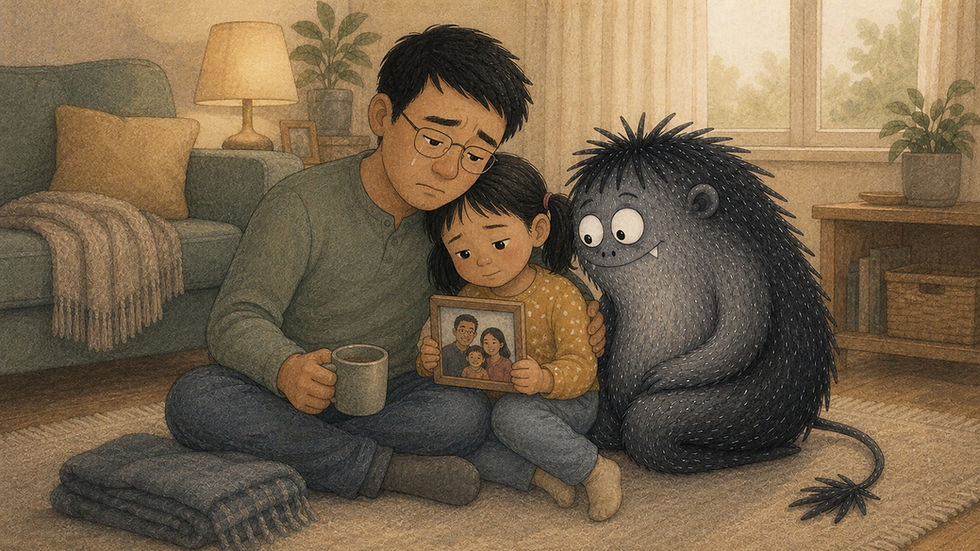
Make room for all the feelings — including the complicated ones. Children may feel intense pride, anger at the military, anger at their parent for leaving, relief that the worry is over, or guilt for any of these. Some feel pressure to be "strong" or live up to a "hero" story. Tell them: "You can be proud of Dad and angry he's gone. You can be sad and still have fun. All of your feelings are welcome." Characters like Anger and Strength from Feelings Grief Brings can help younger kids name what they're feeling.
Avoid making them the "man" or "woman" of the house. Well-meaning relatives sometimes tell children they need to take their parent's place. Children need to stay children — reassure them that the adults are taking care of the family.
Protect what community you can. Many families move after a military death, leaving behind a support system when it's needed most. If a move is necessary, help children say goodbye to friends, keep in touch, and find new places to belong. If your child wants to stay connected to military life — attending events, wearing a parent's unit patch, meeting other military kids — encourage it.
Connect with other kids who understand. One of the most healing experiences for a grieving military child is meeting other kids who've lost a parent in service. TAPS offers free Good Grief Camps for children and teens, where young survivors are paired with military mentors. Many children say it's the first place they didn't feel different.
Keep their parent's story alive. Share stories that go beyond the uniform: how Mom sang off-key, Dad's terrible jokes, the way they made pancakes on Saturdays. A memory box with letters, photos, dog tags, and recorded videos can become a lifelong treasure.
For educators

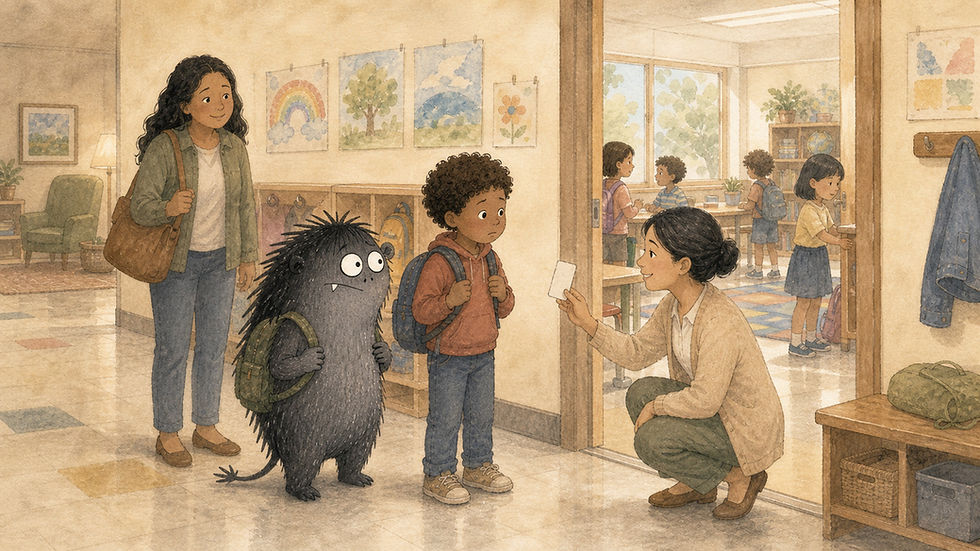
Schools serving military families may see grief ripple through a classroom after a death, especially if other students have deployed parents. Be mindful of how news coverage, Veterans Day and Memorial Day activities, and deployment conversations may affect a grieving child. Offer a private heads-up and choices.
Support for military families
TAPS 24/7 National Military Survivor Helpline: 800-959-TAPS (8277) — free support for anyone grieving a military or veteran loved one.
Sesame Street for Military Families: free, bilingual videos and guides, including When Families Grieve, for children ages 2–8.
Military OneSource: 800-342-9647 — free resources and counseling referrals for military families.
If you or a family member is in crisis: call or text 988 (Veterans and service members can press 1 for the Veterans Crisis Line).
A child who loses a parent in service carries both honor and heartbreak. With truth, community, and permission to feel it all, they don't have to carry it alone.
Sources
Tragedy Assistance Program for Survivors (TAPS). Mission of TAPS and 24/7 National Military Survivor Helpline. https://www.taps.org/mission
TAPS. Sesame Street's Resources for Grieving Military Families. https://www.taps.org/articles/2019/sesame-street-grief-resources
Military OneSource. Sesame Street for Military Families. https://www.militaryonesource.mil/benefits/sesame-street-for-military-families/
Sesame Workshop. When Families Grieve: A Special Guide for Parents and Caregivers. https://sesamestreetformilitaryfamilies.org/wp-content/uploads/2015/04/When_Families_Grieve_Guide.pdf
National Child Traumatic Stress Network. Childhood Traumatic Grief: Information for Parents and Caregivers. https://www.nctsn.org/sites/default/files/resources/fact-sheet/childhood_traumatic_grief_information_for_parents_and_caregivers.pdf

Comments