


Helping a Grieving Child Return to School
Updated: Aug 12
Helping a grieving child return to school takes thoughtful planning. There's no fixed rule for when a grieving child should go back to school — the right timing depends on the child, the loss, and the family's circumstances. What matters most is preparing the return thoughtfully, rather than treating it as a simple return to normal.
Contact the school before the child returns, with the child's knowledge and input. Loop in the teacher, school counselor, and any relevant staff about what happened, how much detail the child is comfortable having shared with classmates, and what kind of support might help. Make sure the child knows this conversation is happening and, where appropriate, has a say in what's shared.

Consider a gradual return rather than an all-or-nothing one. A partial day, a modified schedule for the first week, or an agreed-upon signal the child can use if they need to step out of class can ease the transition, particularly for younger children or those returning to a full day of unstructured social expectations.

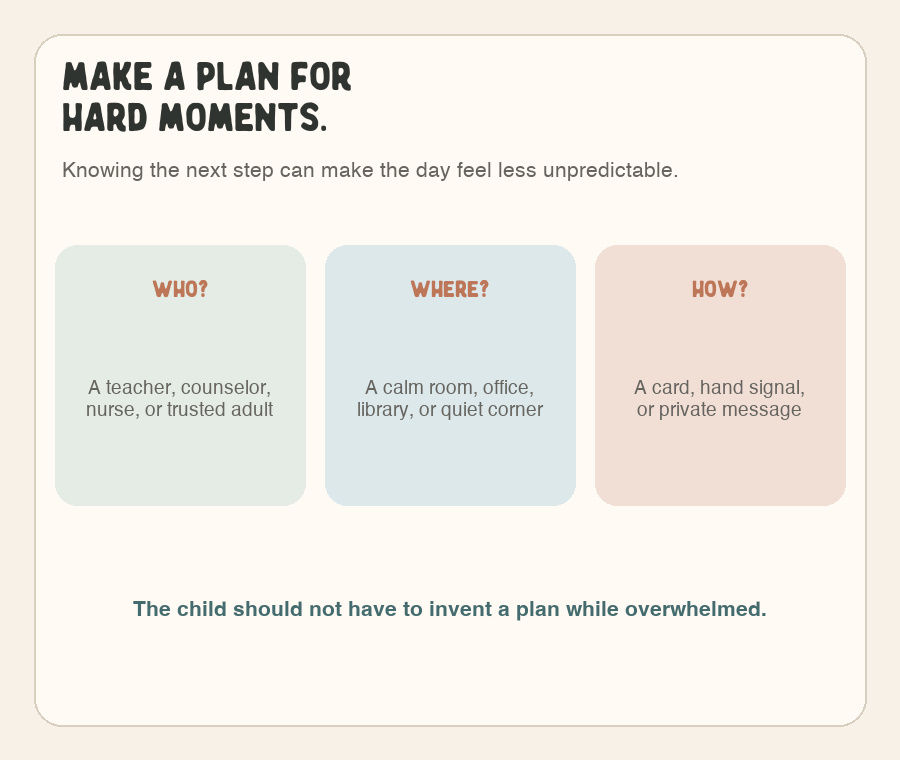
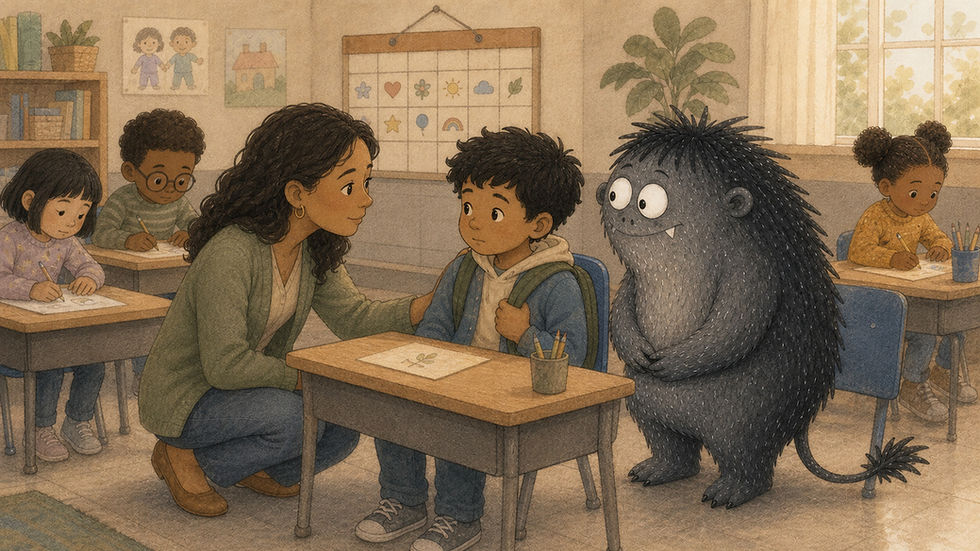
Establish a plan for hard moments during the school day. Knowing in advance who they can go to — a specific teacher, the school counselor, the school nurse's office — and having permission to use it without asking for special treatment publicly, gives a child a sense of control over what might otherwise feel unpredictable.
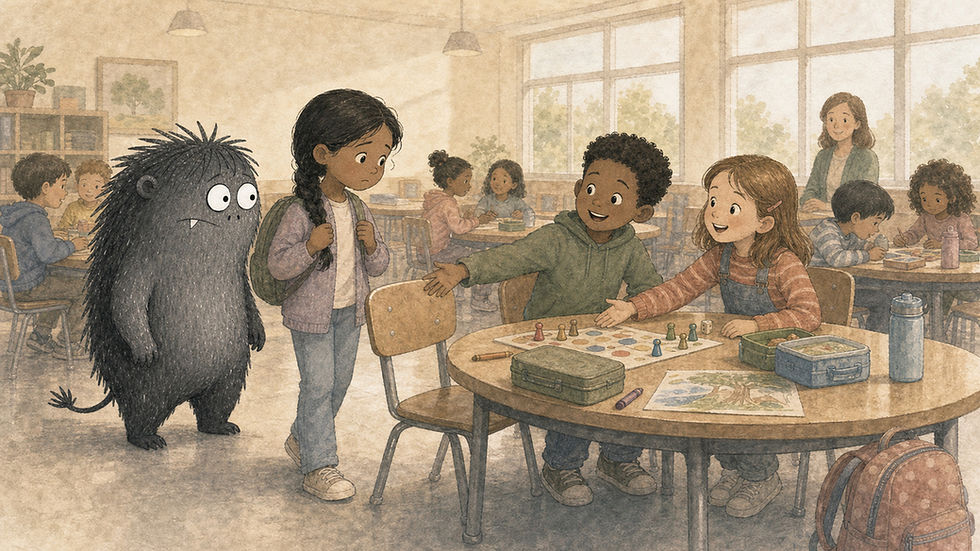
Prepare the child for classmates' reactions, which can vary widely. Some children will say something kind and awkward; others may avoid the topic entirely, which can feel like indifference but is often just a child's own uncertainty about what to say. A brief conversation beforehand — "Some kids might not know what to say, and that's not because they don't care" — can soften the sting of an awkward interaction.

Expect the return to bring up grief in new, situational ways. Assignments about family, holidays on the school calendar, or simply the first time a roll call reflects a changed family structure can trigger unexpected waves of grief well after the initial return. This isn't a sign the return happened too soon.

Stay in ongoing communication with the school, not just at the point of return. A single conversation at re-entry often isn't enough — checking in periodically, especially around anniversaries or difficult academic moments, helps the school continue supporting a child whose grief doesn't end when the first week back is over.

Comments