


Helping a Classroom After a Loss
Updated: Aug 27
When a student loses someone, or when a classroom loses one of its own, teachers are often the ones holding the room together with very little notice and even less training. Here's a starting framework. for helping a classroom after a loss
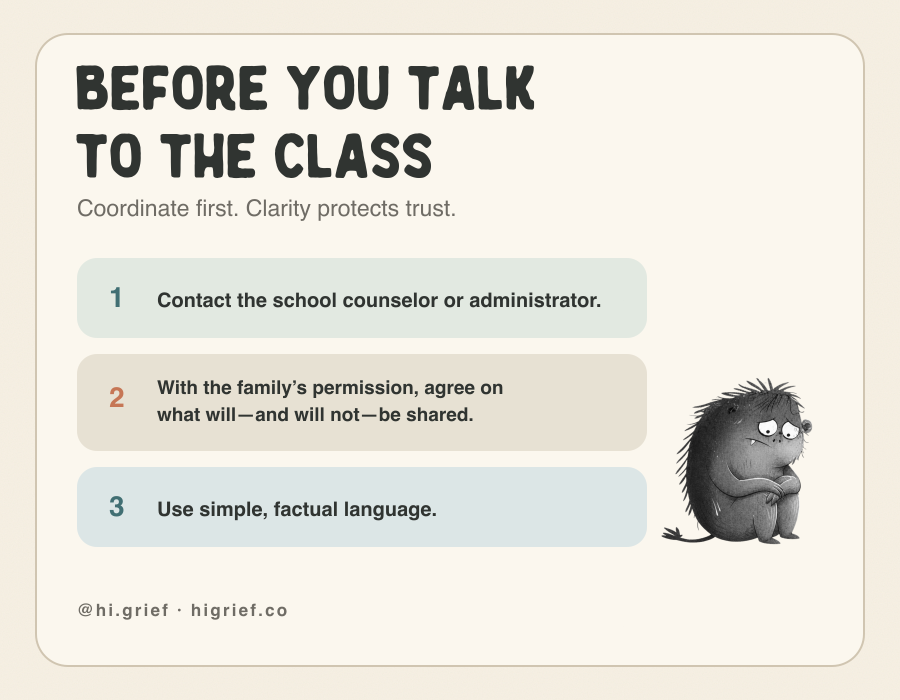
Before you talk to the class, coordinate: If a student in your class has experienced a death, loop in the school counselor and, with the family's permission, agree on what will and won't be shared. Kids often already know more than adults assume, through siblings, social media, or the grapevine, so silence rarely protects anyone. It usually just leaves misinformation to fill the gap.
Keep the initial announcement simple and factual: "I want to let you know that [name]'s [relationship] died. This is really sad news, and it's normal to feel a lot of different things about it, sad, confused, maybe even nothing at all right now. We're going to take a few minutes to talk about it if you want to, and then we'll get back to our day." Avoid extended silence or forcing a group discussion nobody's ready for, offer the space and let kids opt in.
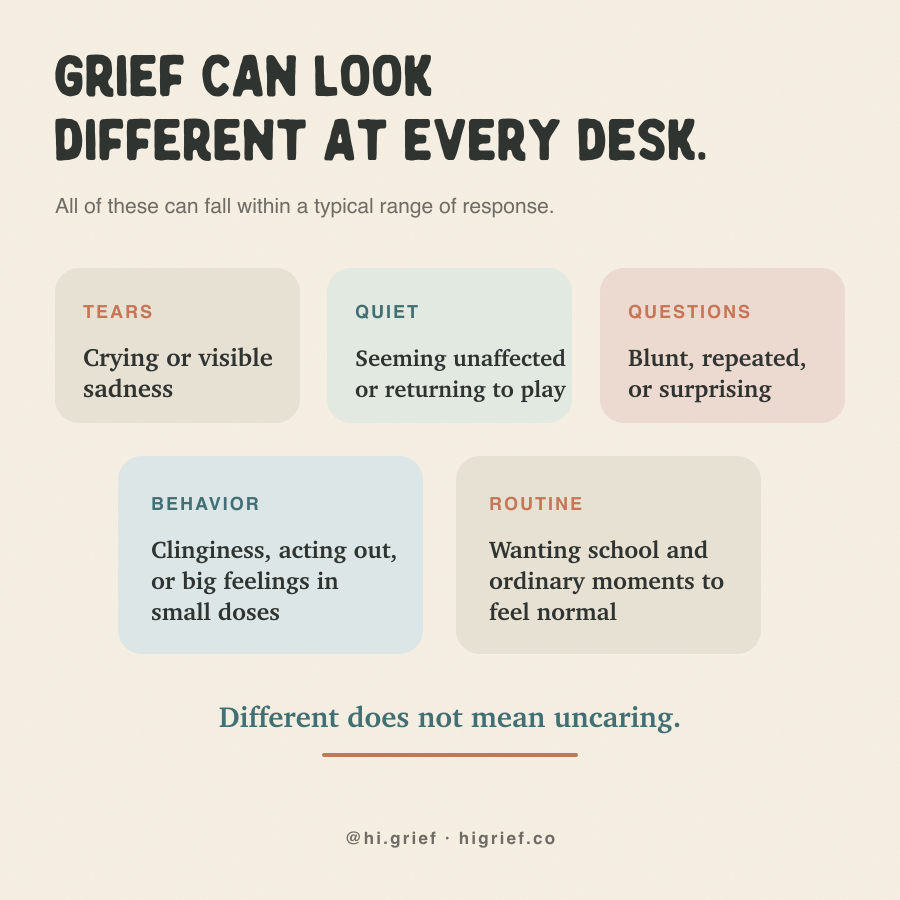
Watch for the range of normal reactions: Some students will cry. Some will seem completely unaffected and go back to normal play within minutes, that's not a lack of caring, it's often how children regulate big feelings in small doses. Some will act out, get unusually clingy, or ask surprisingly blunt questions. All of this is within the range of typical grief response in a classroom setting.
Give the grieving student, if there is one, some control: Ask them, privately, how much they want classmates to know, whether they want a card or gesture from the class, and whether they'd rather be treated normally or checked in on. Kids often want less attention drawn to them than adults assume, especially in the days right after they return to school.
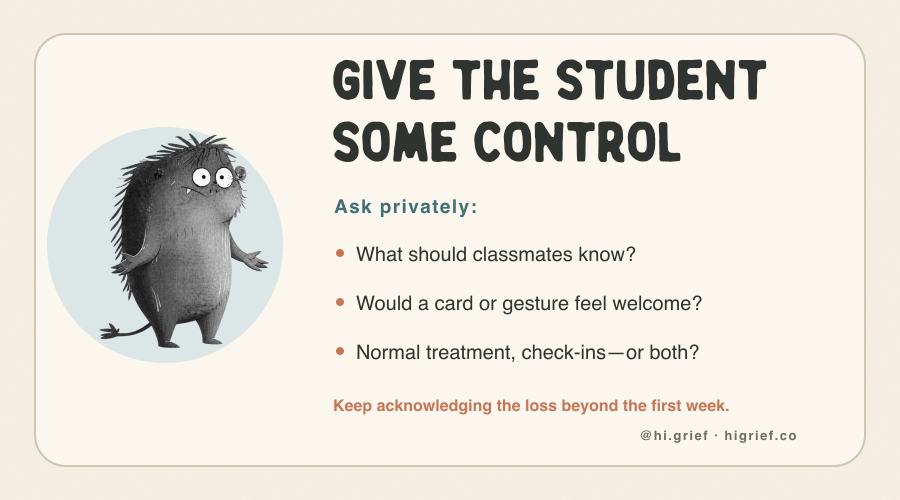
Build in small, ongoing acknowledgment, not just a one-time response: Anniversaries, holidays, and the "second wave" of grief weeks or months later are often harder than the first days. A quiet check-in from a teacher near a birthday or holiday can mean more than anything said in the first week.
Know your limits, and know your school's supports: You're not expected to be a grief counselor. Your job is to keep the classroom a steady, honest, safe place, and to know when to bring in someone with more training for a student who's struggling well past what feels ordinary.

Comments