


Grief Anniversaries at School: Supporting Students Through Anniversaries and Difficult Dates
Updated: Aug 12
Grief anniversaries at school deserve careful, quiet attention from the adults who notice them. The anniversary of a death — along with birthdays, holidays, and other significant dates tied to the loss — can bring a resurgence of grief for a student, sometimes long after teachers, classmates, and even the family assume the worst has passed.
Know that anniversary reactions are well documented and completely normal. Even children who don't consciously track the calendar date often experience a subtle shift around the anniversary — changes in mood, sleep, focus, or behavior — sometimes without immediately connecting it to the date themselves.

Mark the date quietly on a shared calendar, with the family's input. A teacher or counselor who knows a significant date is approaching can watch for signs of distress, offer a gentler landing if a student seems off that day, and avoid scheduling especially demanding tests or high-pressure events without flexibility around it.

Offer a low-key check-in rather than a big production. A brief, private "I know this week might be hard — let me know if you need anything" from a trusted adult tends to land better than a public acknowledgment, which can feel exposing rather than supportive.
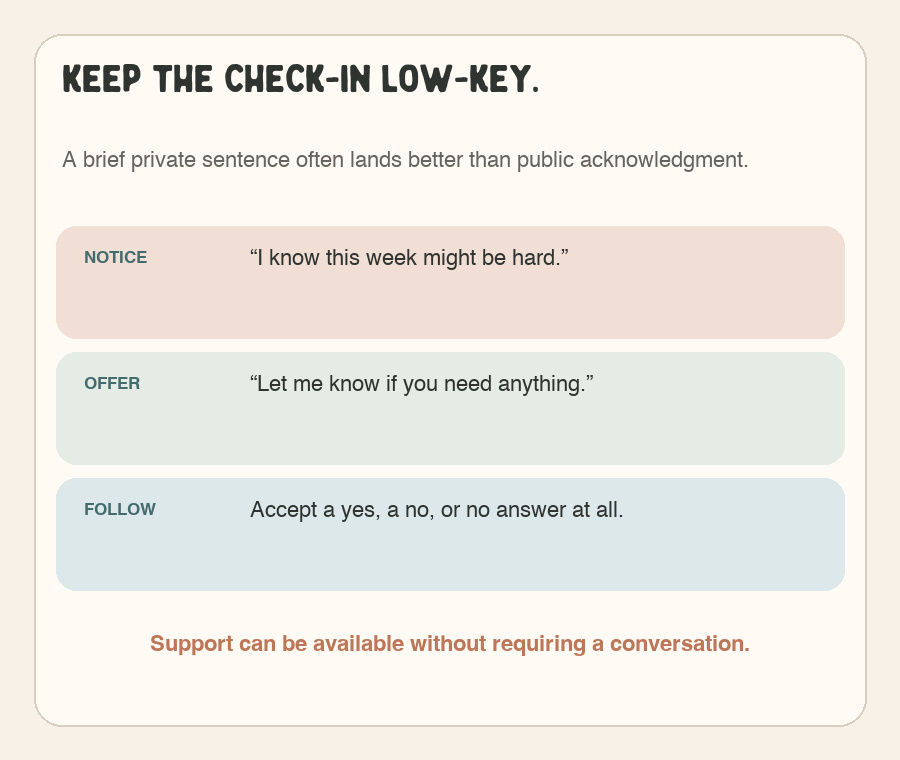
Watch for behavior changes that don't have an obvious cause around these dates. A normally focused student who seems distracted, irritable, or withdrawn near a difficult anniversary may be experiencing exactly that, even if they haven't said anything and might not fully recognize the connection themselves.
Recognize that these reactions can continue for years, not just the first year. It's a common misconception that grief anniversaries fade quickly. Many children and teens continue to experience some version of this reaction well beyond the first year, especially around milestone anniversaries or significant life events the person is missing.

Build in flexibility for known difficult dates whenever possible. For a family or school that knows a hard date is coming, a flexible plan — the option to leave an assembly, a lighter homework day, permission to spend lunch somewhere quieter than usual — can make a meaningful difference without singling the student out.



Comments