


How to Explain Pet Euthanasia to a Child
When a beloved pet's illness or age reaches a point where euthanasia is the kindest option, explaining that decision to a child requires care. It's one of the few death conversations that involves an active choice, which makes honesty especially important.
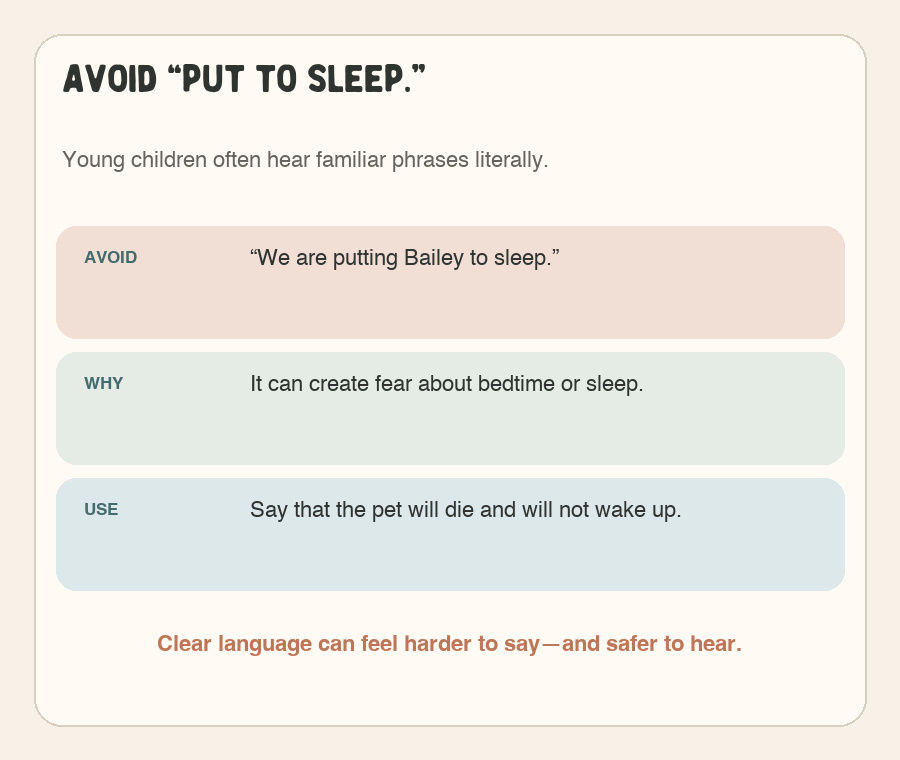
Avoid "put to sleep" or similar phrases entirely. These common euphemisms can create real, lasting anxiety about sleep itself in younger children, and they obscure what's actually happening in a way that can feel misleading once a child is old enough to understand the phrase more literally.
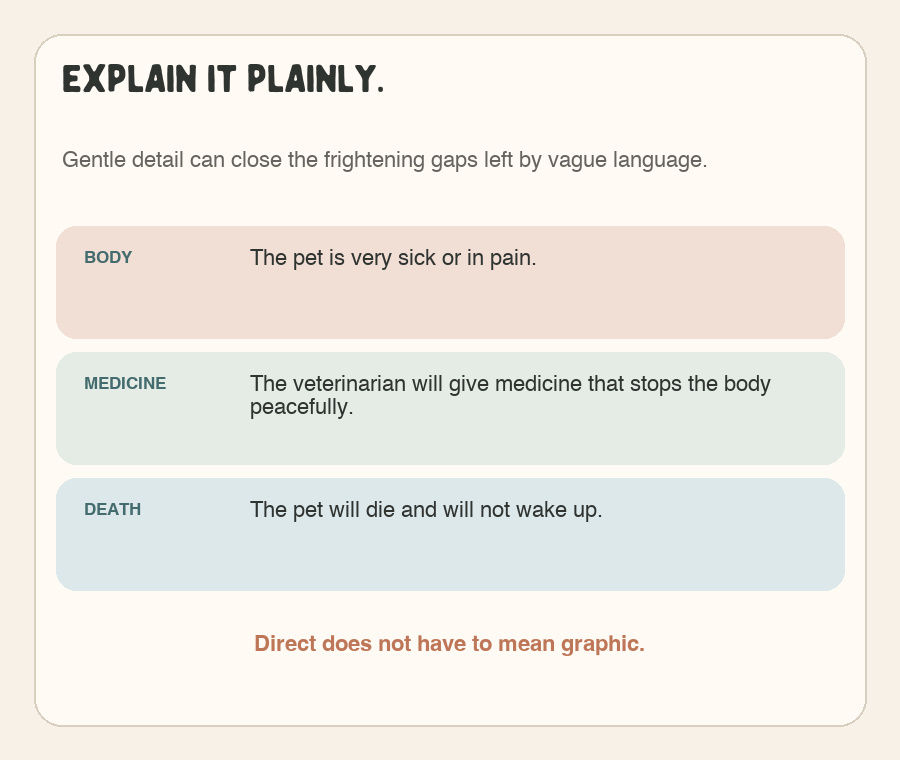
Explain euthanasia in plain, gentle, but accurate terms. Something like: "Bailey is very sick and in pain, and the medicine can't make him better. The vet is going to give him a special medicine that will make his heart stop beating peacefully, without any pain, so he doesn't have to suffer anymore. He will die, and he won't wake up." This is direct without being graphic, and it doesn't leave the central fact — that this will result in death — unclear.
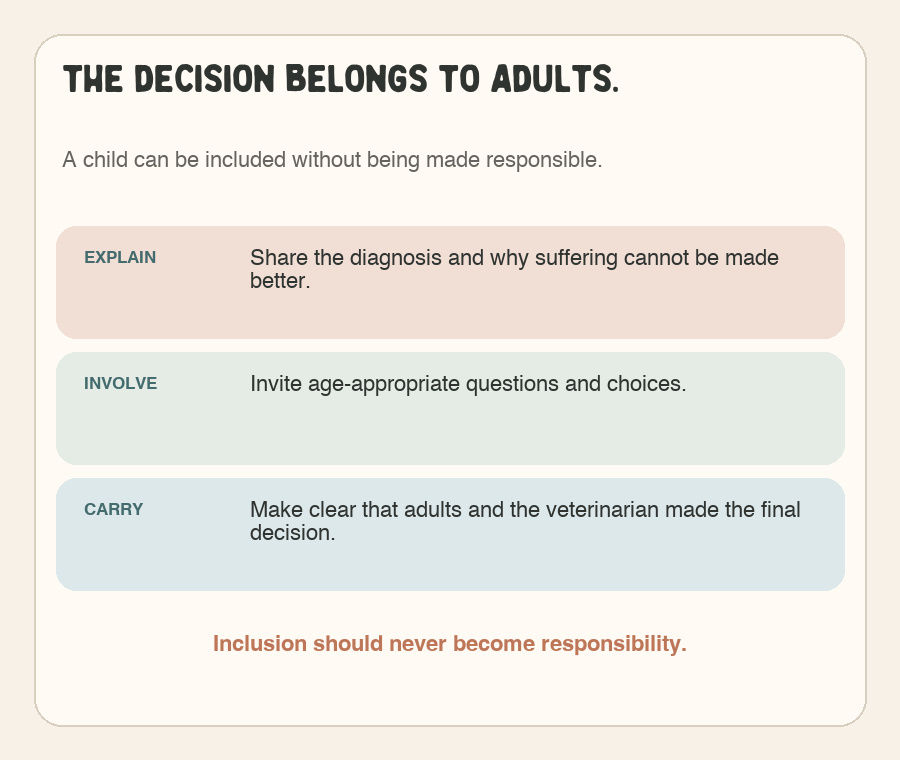
Involve the child in the decision-making process to whatever extent is appropriate for their age. Explaining the pet's diagnosis, the reasoning behind the decision, and the fact that it's meant to prevent further suffering can help a child understand this as an act of care rather than an arbitrary choice made without them.
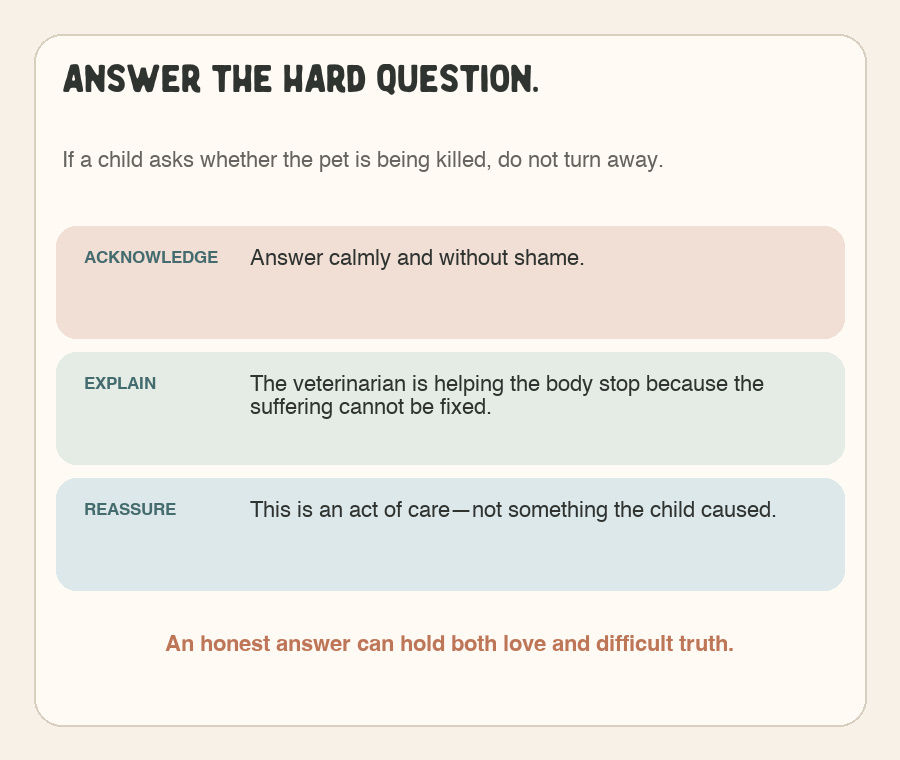
Be honest that this is different from other kinds of death, without over-explaining the ethics of it. If a child asks whether this means the pet is being "killed," a simple, calm response — "The vet is helping his body stop working peacefully because he's suffering and can't get better. It's a kind and gentle way to help him not be in pain anymore" — addresses the question honestly without turning it into a debate a child isn't equipped to have.
Offer the child a choice about being present, without pressure either way. Some veterinary practices allow families, including children old enough to handle it, to be present during a home or in-clinic euthanasia. This can be a meaningful goodbye for some children and overwhelming for others — there's no single right answer, and the child's own preference should carry real weight.
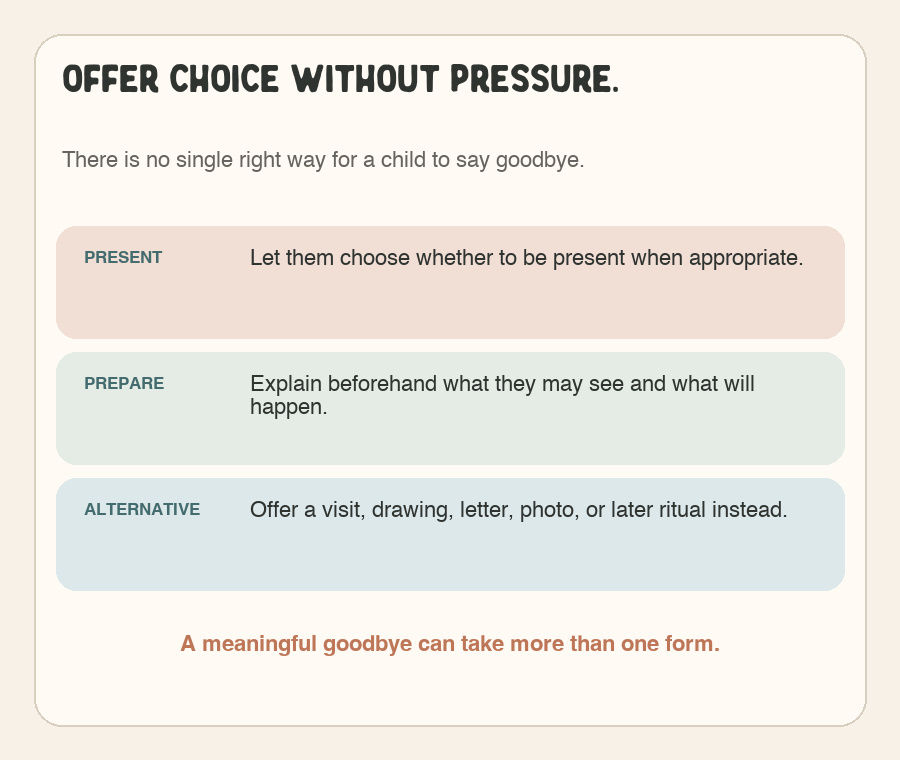
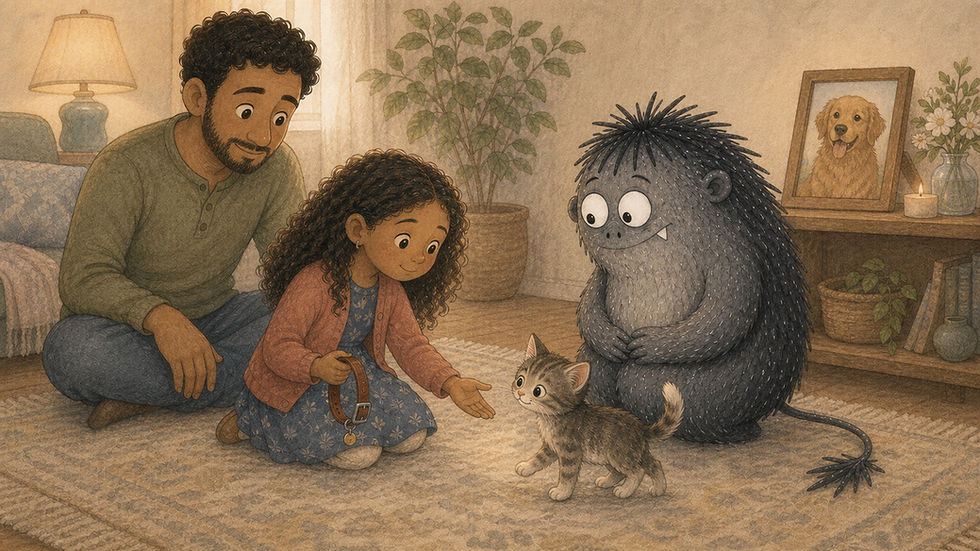
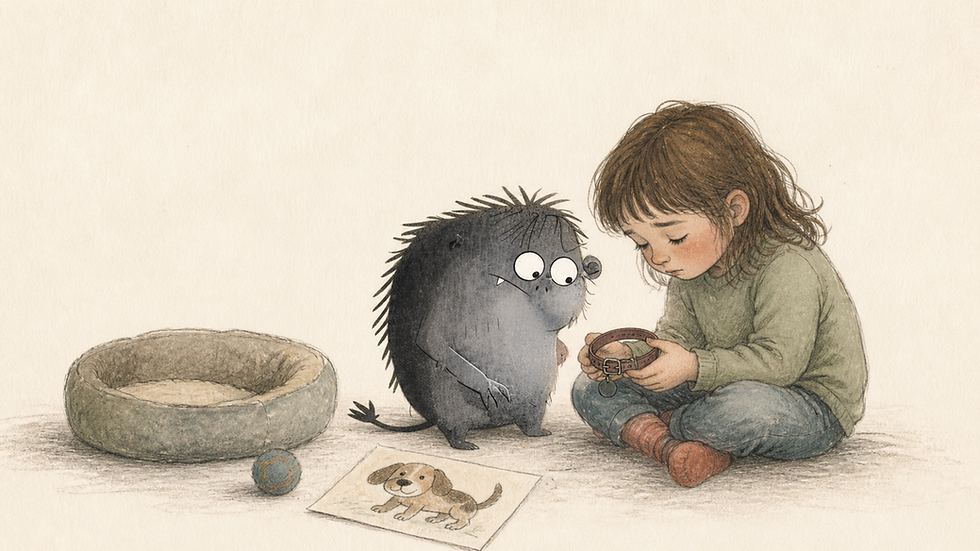
Give the child space to say goodbye in whatever way suits them, whether that's being present, visiting beforehand, drawing a picture, or simply having a quiet moment with the pet. Afterward, treat the grief as real grief — because for many children, it is exactly that.

Comments