


When to Get a New Pet After a Loss: Is It Okay to Welcome Another Pet?
Updated: Aug 12
There's no universal waiting period for welcoming a new pet after a loss — but timing and framing both matter, especially for a child who's still actively grieving.
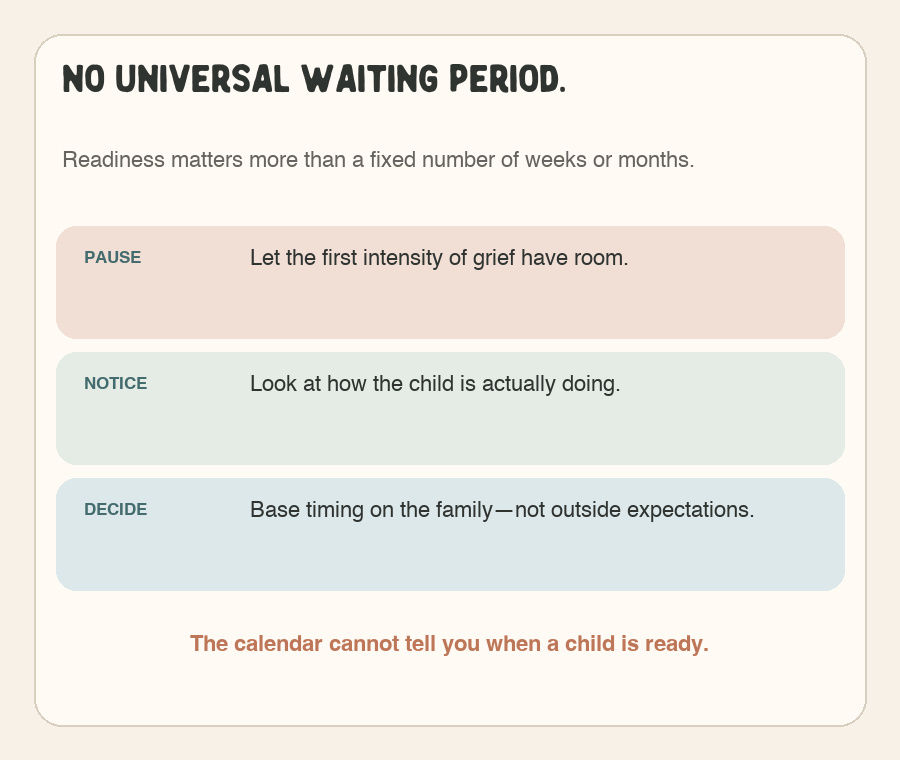
Let the grief run its course before rushing to replace the loss. Bringing home a new pet too quickly, even with the kindest intentions, can send an unintended message that the previous pet was easily substituted, or that grief is something to skip past as fast as possible. There's no fixed number of weeks that's "correct," but checking in with how the child is actually doing matters more than a calendar.
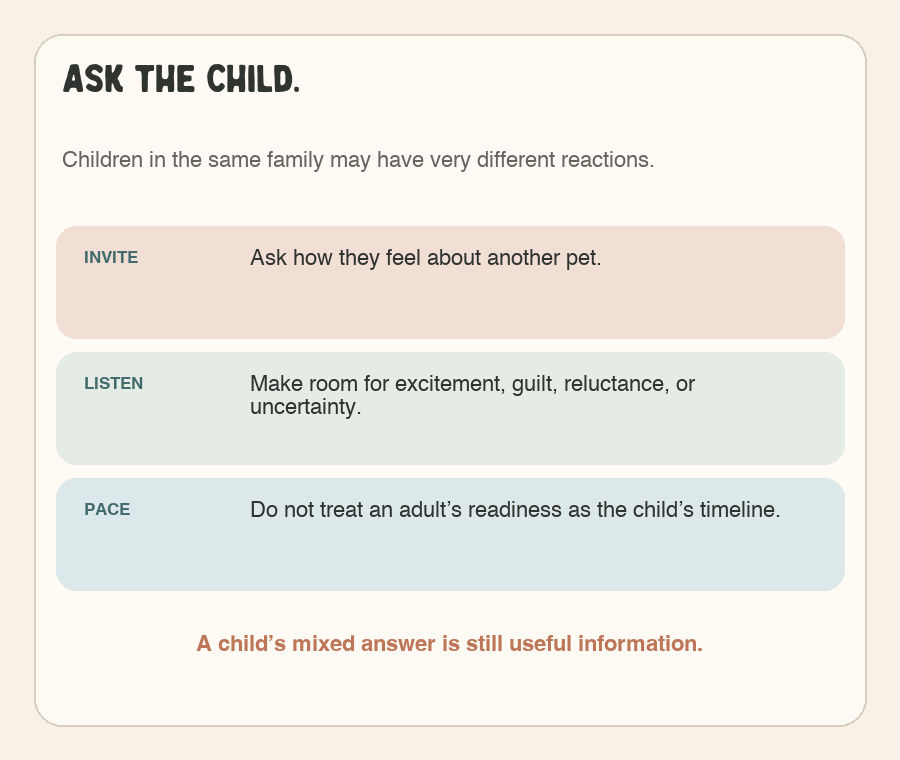
Ask the child how they feel about a new pet, rather than deciding for them. Some children are ready and even eager for a new companion relatively soon; others need much longer, and some may feel a flash of guilt at the idea of loving a new pet at all. All of these reactions are normal, and a child's own readiness should guide the timing more than an adult's timeline.
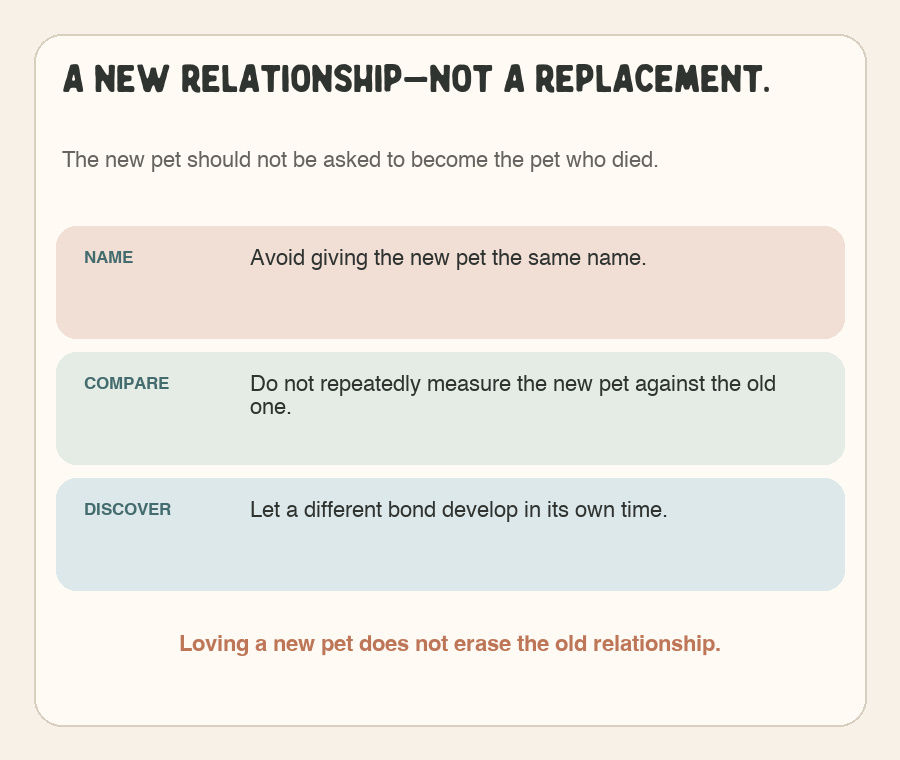
Frame a new pet as its own relationship, not a replacement. Avoid giving a new pet the same name, or implicitly comparing the new pet to the one who died ("Buddy would have loved this"). Let the new relationship develop on its own terms, separate from the old one.
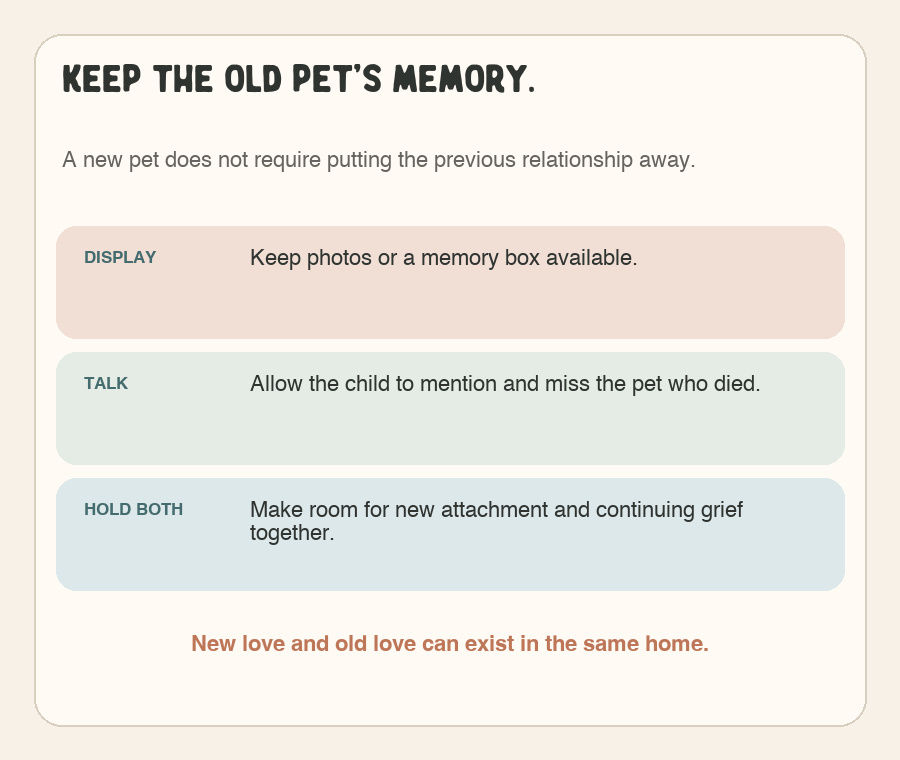
Keep space for the old pet's memory even after a new one arrives. Photos, a memory box, or simply the freedom to talk about the pet who died without it being treated as awkward or unwelcome helps a child feel like loving a new pet doesn't require forgetting the old one.
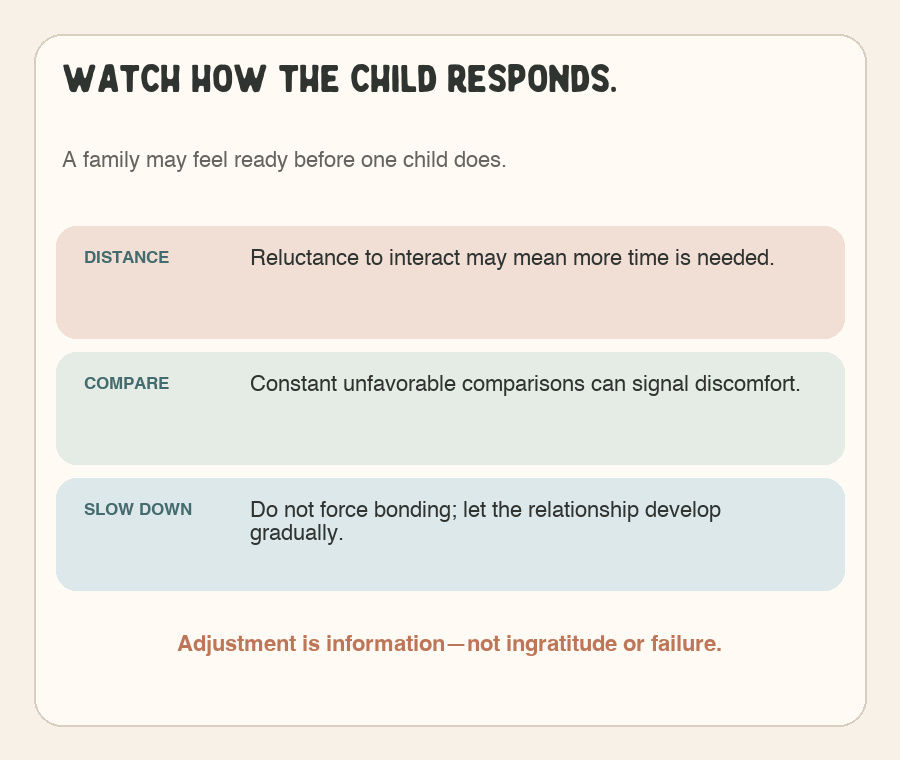
Watch for signs a child isn't ready, even if the family is. Reluctance to bond with the new pet, comparing it unfavorably, or seeming upset by its presence may mean more time is needed before the new relationship can take root comfortably.
If financial, practical, or family circumstances mean there won't be another pet soon or ever, that's worth acknowledging honestly too. "We're not getting another pet right now, and that's a loss too, on top of missing Bailey" validates the child's experience rather than leaving the topic unaddressed.


Comments