


What to Say When a Pet Dies
Updated: Sep 29
For a lot of kids, a pet's death is their first real encounter with loss, and it deserves to be treated as real grief, not a smaller, easier version of it. Knowing what to say when a pet dies can make that first encounter easier for a child to move through.
Don't minimize it, even if the pet "was just" a hamster or a goldfish: For a young child, that pet may have been a daily source of comfort, routine, and unconditional companionship. Comparisons like "it's not like losing a person" or "we can just get a new one" tend to shut a child down rather than help them.
Use clear, honest language, just like you would for a person: "Bailey died. His body stopped working, and he's not going to wake up." If the death involved a decision, like euthanasia for an ailing or aging pet, it's usually better to explain simply and truthfully rather than let a child discover later that a choice was made and feel misled: "The vet helped Bailey's body stop hurting, because he was very sick and wasn't going to get better."
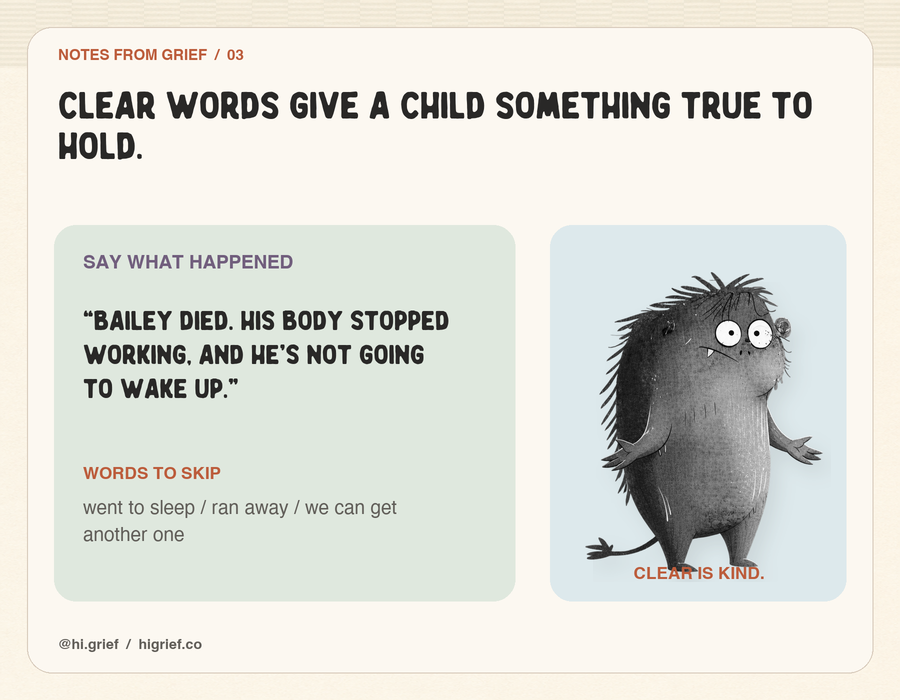
Expect big feelings, and also expect some surprising ones: Guilt is extremely common with pet loss, "I forgot to feed her that one time," "I wasn't nice enough to him last week." Reassure the child directly that nothing they did caused this. Some kids will also ask logistical or even seemingly odd questions (where will the pet be buried, what happens to its body), answering plainly, without judgment, tends to help more than redirecting away from the topic.

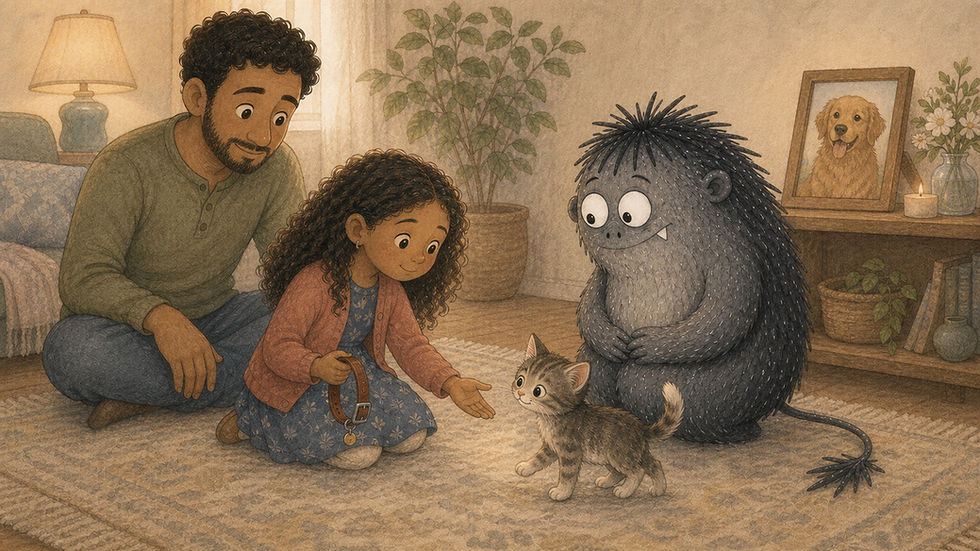
Consider a small ritual: A backyard burial, a drawing, a memory box, or simply telling favorite stories about the pet together can give a child a concrete way to say goodbye, something that's often harder to come by with pet loss than with a formal funeral.

Watch the timing of "getting a new pet": Rushing to replace a pet, even with good intentions, can send the message that the loss didn't matter, or that grief is something to skip past quickly. If a new pet does come along eventually, let it be its own relationship, not a replacement, and let the child set the pace.


Comments