


Is It Normal for a Grieving Child to Keep Playing?
Updated: Aug 12
Few things unsettle a grieving adult more than watching a child cry over a loss one minute and ask to go play the next. It can look like denial, or like the child hasn't really understood what happened. Neither is usually true.
Children grieve in bursts, not in sustained states. Where adults often carry grief as a continuous background weight, children tend to feel it in short, intense waves — a few minutes of sadness or tears, then a return to ordinary play, then perhaps another wave later. This isn't avoidance; it's widely documented as one of the most typical and healthy patterns in how children process loss.

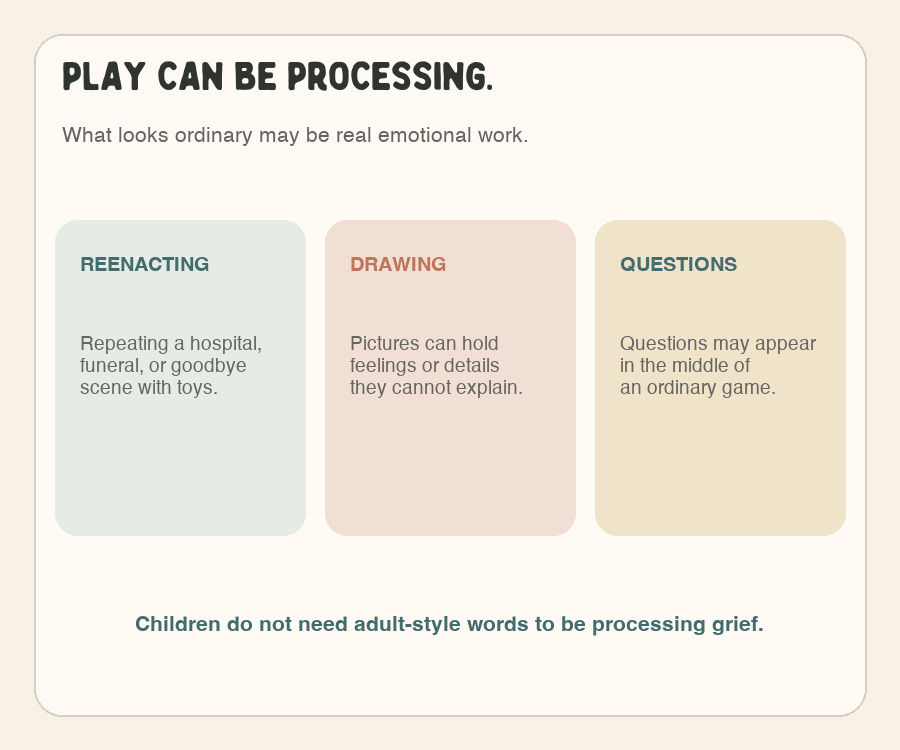
Play is often how children process, not just how they distract. A child re-enacting a hospital scene with stuffed animals, or drawing pictures related to the death, or asking a stream of factual questions mid-game, may be doing real emotional work inside what looks like ordinary play. Children frequently lack the verbal tools adults use to process grief, and play fills that gap.
A child's capacity for sustained sadness is genuinely different from an adult's. This isn't a flaw or a sign of shallow feeling — it's a developmentally appropriate limit. Expecting a child to grieve continuously, the way many adults do, sets an unrealistic and unnecessary bar.
Watch the pattern over time, not any single moment. A child who plays normally between waves of grief, sleeps reasonably well, and can still enjoy things some of the time is showing a pattern consistent with healthy grieving — even if any individual afternoon looks confusingly cheerful.

Resist the urge to interrupt play to "make sure they're taking it seriously." Redirecting a playing child back to talking about the loss can send the message that their natural coping mechanism is wrong, which may make them hide it rather than stop needing it.

If a child seems unable to re-engage with play or ordinary activities at all for an extended period, or seems to be avoiding all mention of the loss in a way that feels rigid rather than natural, a grief-informed counselor can help assess what's going on underneath. It's completely normal when a grieving child keeps playing, and understanding that can ease a lot of worry for the adults around them.

Comments