


What Grief Might Look Like in Children: Myths vs. Reality
Updated: Aug 10
A lot of well-meaning support for grieving kids is built on ideas that don't actually hold up. Here are some of the most common ones, and what tends to be true instead. Knowing what grief might look like in children helps separate the myths from what's actually normal.
Myth: Grief moves through predictable, universal stages. The "five stages" framework (denial, anger, bargaining, depression, acceptance) was originally developed to describe the experience of dying adults, not grieving children, and even in its original context it was never meant to be a fixed sequence everyone follows. Children's grief is far more individual, it can loop back, skip around, show up in bursts, or seem to disappear and resurface months later. There's no timeline a child is supposed to be "on track" with.

Myth: A child who isn't crying isn't grieving. Children often grieve in short bursts rather than sustained emotional states, sad for ten minutes, then playing normally, then sad again later. This isn't denial or a lack of caring; it's one of the most well-documented and healthy patterns in childhood grief. Adults sometimes worry when a child "seems fine" and goes back to playing shortly after hearing hard news, that's typically a sign of a child's natural capacity to regulate big feelings in small doses, not a red flag on its own.

Myth: Talking about the person who died will make a child sadder. Avoiding the subject to "protect" a child from sadness usually backfires, it can send the message that the loss is too big or too dangerous to discuss, which tends to increase anxiety rather than reduce it. Most children benefit from being able to bring up the person who died, ask questions, and hear their name spoken without it being treated as off-limits.
Myth: Young children don't really understand death, so it doesn't affect them much. Even toddlers and preschoolers, who don't yet grasp that death is permanent, can be deeply affected by changes in routine, a caregiver's grief, or the absence of someone they loved. Grief in very young children often shows up as regression (thumb-sucking, bedwetting, clinginess) rather than the language-based expressions adults expect.
Myth: There's a "normal" amount of time grief should take. There's no universal timeline, and grief for children often changes shape rather than simply fading, showing up differently at each new developmental stage as they come to understand the loss in new ways. A child may "re-grieve" the same loss at seven, then again at twelve, then again as a teenager, each time from a more mature understanding.
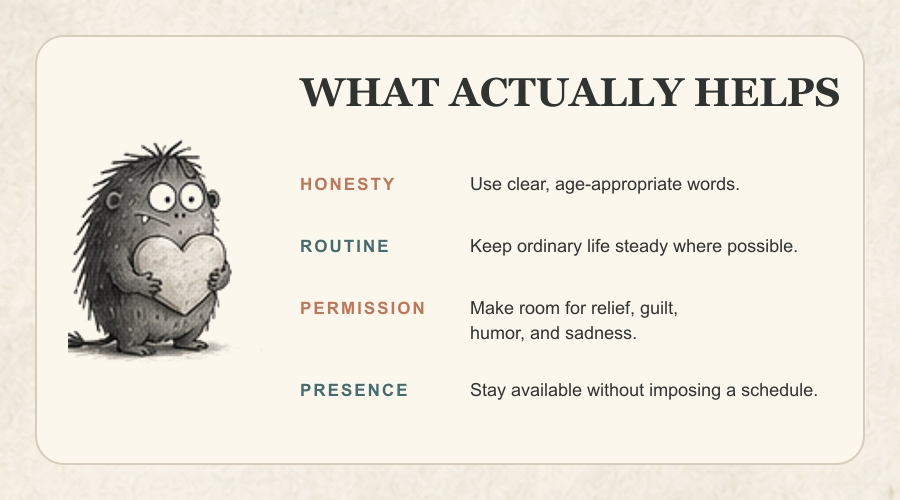
What's actually true, consistently: children do best with honesty, routine, permission to feel a full range of emotions (including relief, guilt, or even humor), and steady adults who don't need them to grieve on a particular schedule. If a child's distress is intense, prolonged, or interferes significantly with daily functioning, that's the signal to bring in a professional, not a specific number of weeks or months.

Comments