


When Might a Grieving Child Need More Support?
Updated: Aug 12
Most children, given honesty, routine, and steady adults around them, grieve without needing professional intervention. But some patterns are worth paying closer attention to, and knowing what they look like can help you act early rather than waiting for a crisis.
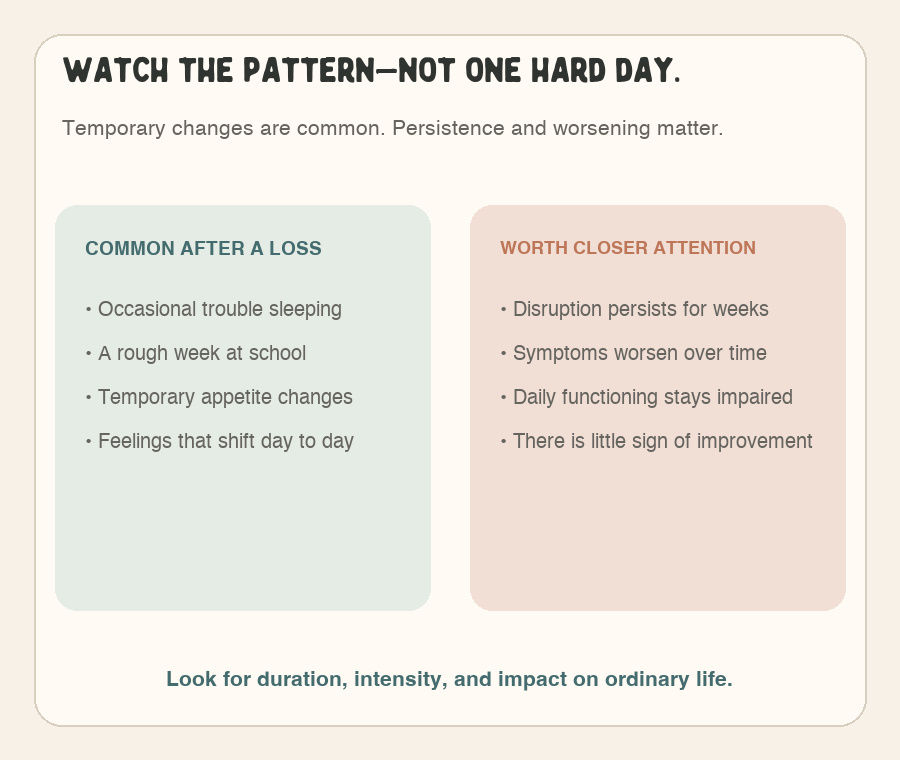
Watch for prolonged, significant disruption to daily functioning. Occasional trouble sleeping, a rough week at school, or temporary changes in appetite are common and usually pass. It's a different matter when these disruptions persist for many weeks with no improvement, or worsen over time — that pattern suggests a child may need more support than family and routine alone can provide.
Pay attention to persistent guilt, especially if a child seems to believe they caused the death. Many grieving children carry some private guilt, and gentle, repeated reassurance usually resolves it. If a child continues to insist they're responsible despite clear, repeated reassurance, or shows signs of significant self-blame, that's worth a professional's help to untangle.
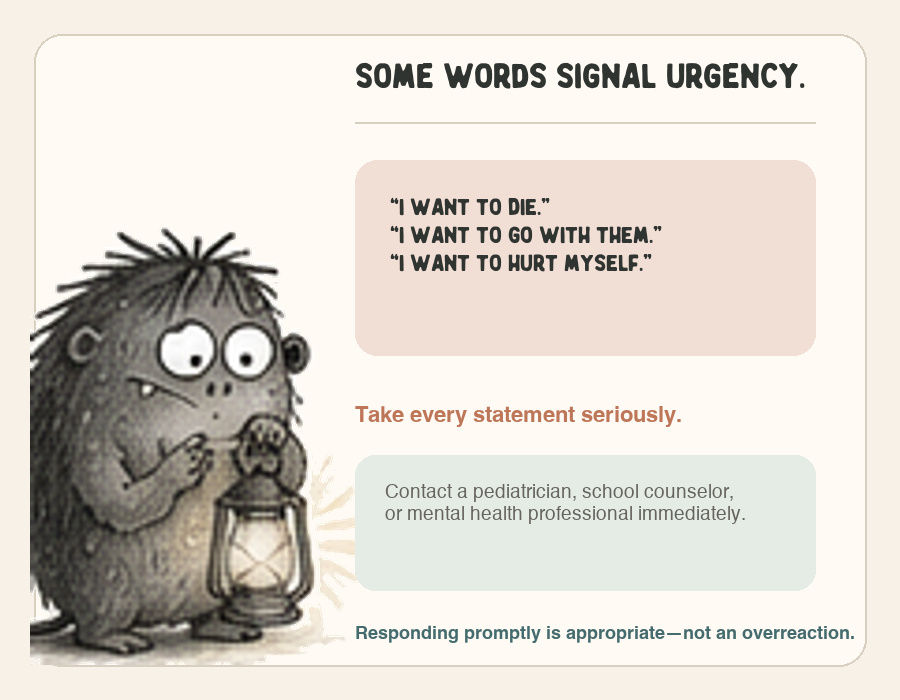
Notice any statements about wanting to die, join the person who died, or hurt themselves. These statements should always be taken seriously and never dismissed as "just something kids say." They warrant an immediate conversation with a pediatrician, school counselor, or mental health professional — not as an overreaction, but as the appropriate response to a genuine warning sign.
Consider the loss of previously enjoyed activities or relationships. A child who has stopped wanting to see friends, has lost interest in everything they used to enjoy, or has withdrawn significantly and doesn't reengage after a reasonable adjustment period may be showing signs of depression rather than typical grief, which can benefit from professional evaluation.
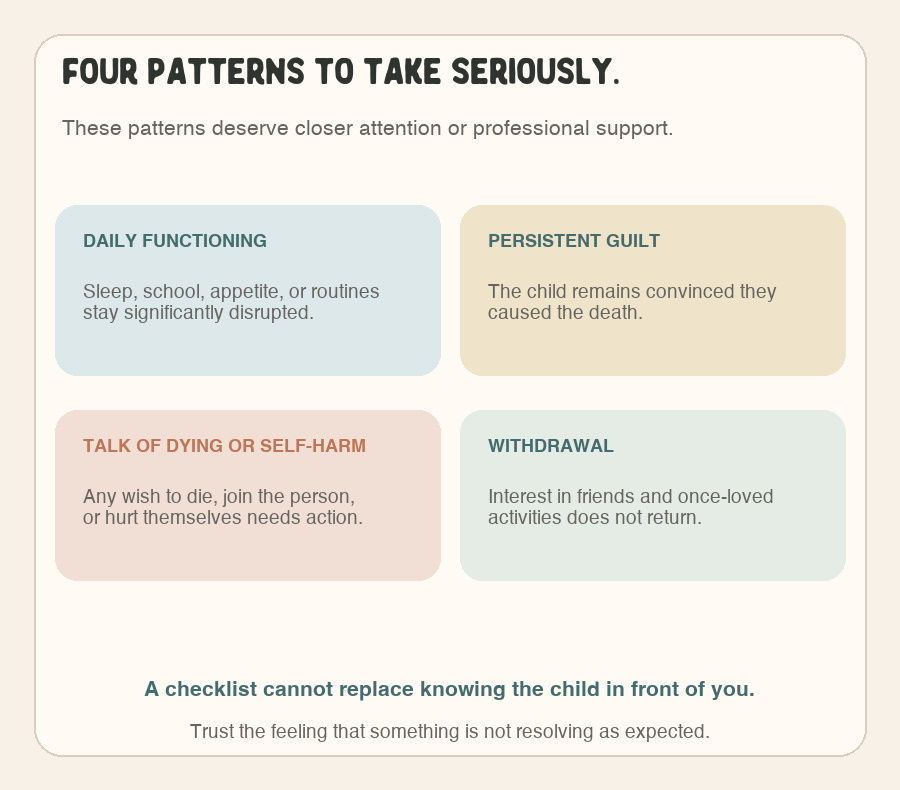
Trust a caregiver's instinct that something feels different or "off." You know this child better than any general guideline can. If your gut says something isn't resolving the way you'd expect, that instinct is worth acting on, even without a specific checklist item to point to.
Knowing when grieving child needs more support than everyday routines can offer often comes down to noticing patterns rather than a single hard day.
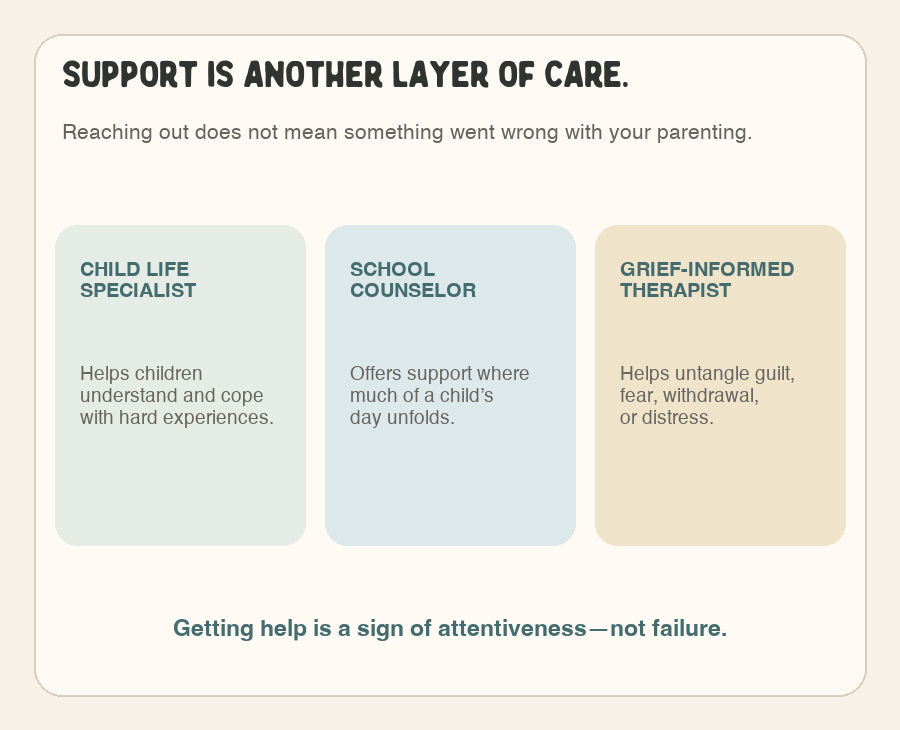
Getting support doesn't mean something has gone wrong with your parenting. A child life specialist, school counselor, or grief-informed therapist is simply another layer of support — the same way you'd bring in a tutor for a hard subject or a doctor for a lingering illness. It's a sign of attentiveness, not failure.
Comments