


You Don’t Have to Justify This Grief: Pregnancy and Infant Loss Support for Families
Pregnancy and infant loss carries a particular kind of loneliness. There may be no funeral other people know how to attend, no photographs they have seen, and sometimes no name they ever heard out loud. The world may have known very little about this baby while you had already begun imagining an entire life.
Then come the sentences meant to make the loss feel smaller:
“At least it was early.”
“You can try again.”
“At least you know you can get pregnant.”
They may be offered kindly. They still ask a grieving person to look past the baby who died and toward a future they may not be ready to imagine.
Real pregnancy and infant loss support does not search for a silver lining. It makes room for the love, the loss, and the life that was expected.
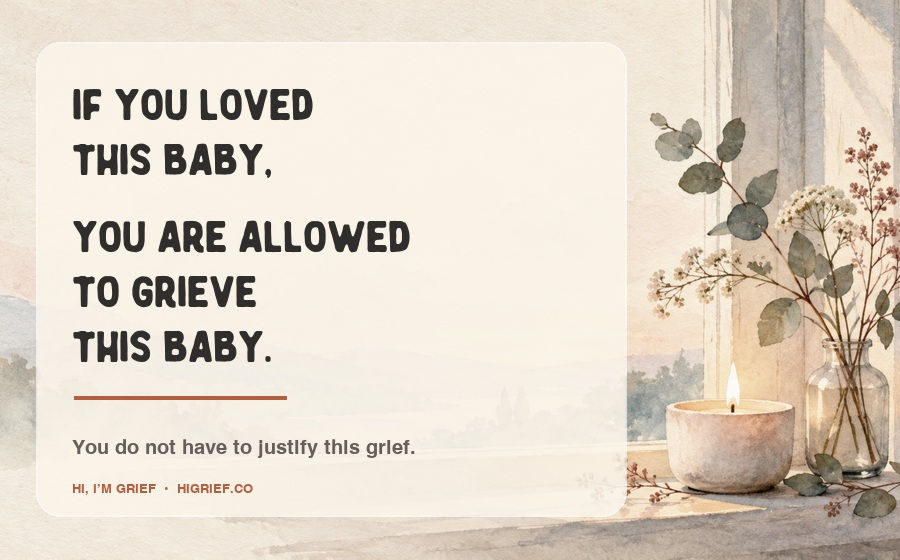
If you loved this baby, you are allowed to grieve this baby
It does not matter how many weeks the pregnancy lasted. It does not matter whether you had announced it, chosen a name, prepared a room, or held your baby in your arms. A loss that happened early is not a love that mattered less.
Pregnancy and infant loss can include miscarriage, ectopic or molar pregnancy, termination for medical reasons, stillbirth, and the death of a newborn or infant. These experiences are medically and emotionally different. No single description will fit every family, and not every person will use the same words for the pregnancy or baby.
Follow the grieving family’s language. If they say “our baby,” say “your baby.” If they use a name, use the name. If they speak more privately or clinically, respect that too. Support begins by letting the person closest to the loss tell you what it means to them.
There is also no required way to feel. Grief may arrive as sorrow, anger, numbness, guilt, relief, jealousy, anxiety, or a confusing mixture of several feelings at once. It may be quiet one day and overwhelming the next. None of that measures how much someone loved.
This grief can reach the whole family
Pregnancy and infant loss does not happen to only one person, even though each family member may experience it differently.
A partner or non-gestational parent may be grieving while also trying to manage calls, care for children, return to work, or support the parent whose body is recovering. Their grief may look different. Different does not automatically mean absent.
Grandparents may grieve both the baby and the pain they see in their own child. Friends and relatives may feel unsure whether they are “close enough” to name the loss. Family members can end up protecting one another so carefully that everyone feels alone.
There is no need to compare whose grief is deepest. The more useful question is: *What does each person need in order to feel less alone?*
When children are grieving the baby too

A toddler may have been told, “You’re going to be a big sister.” A six-year-old may have felt the baby move. An older child may have pictured where the baby would sleep, worried about the parent who went to the hospital, or quietly wondered whether something they did caused the loss.
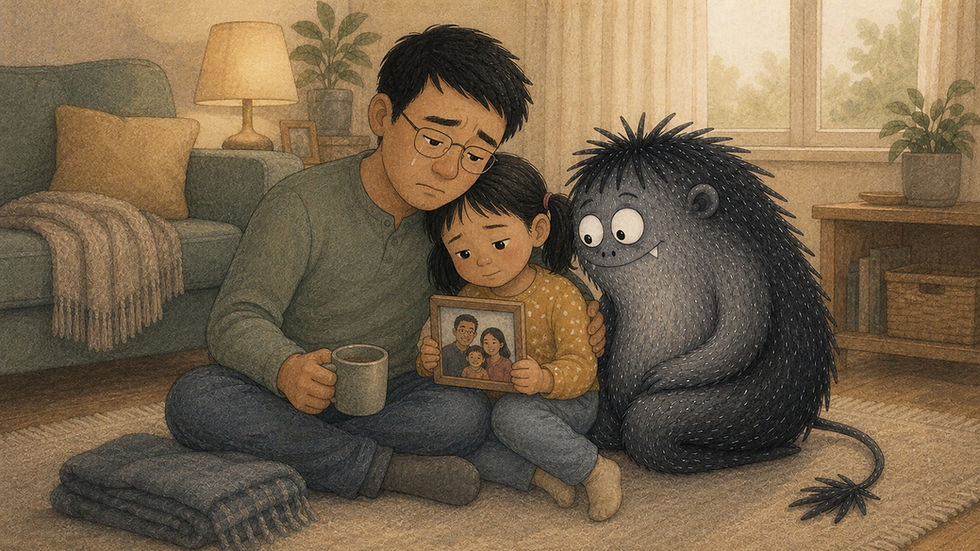
Children notice more than adults sometimes expect. They notice the unused baby items, the changes in routine, a parent crying in the car, and the way adults become quiet when the baby’s name is mentioned. When no one explains what happened, children often create their own explanation. That story can be more frightening than the truth.
You do not have to share every medical detail. Start with a short, honest explanation and let the child’s questions guide what comes next:
“I have very sad news. The baby died before they were born. That means the baby’s body stopped working, and the baby cannot come home. We are very sad. Nothing you thought, said, or did made this happen. You can ask me questions now or later.”
If the baby died after birth, change the first sentence to match what happened. Use clear words such as died and dead. Phrases such as “we lost the baby,” “the baby went to sleep,” or “the baby went away” can confuse young children, who usually understand language literally.
Children may ask the same question repeatedly. Repetition is often how they test whether the answer is still true and slowly take in what death means. Keep the answer simple and consistent. It is also okay to say, “I don’t know.”
If a child sees you cry, you can give the tears a name and offer reassurance:
“I’m crying because I miss the baby. Grown-ups can cry and still take care of you. You are safe.”
Children do not need adults to hide every feeling. They need to know the feeling is not their fault and that caring adults are still in charge.
What actually helps a grieving parent

The most useful support is usually not a reason, a lesson, or a plan for what comes next. It is steady presence without an agenda.
You might say:
- “I don’t have the right words, but I’m here.”
- “You do not have to be okay with me.”
- “I remember your baby. Would you like to tell me about them?”
- “I’m thinking about you today. You do not need to reply.”
- “Would you like me to use the baby’s name when we talk?”
Then make care concrete. Grief can make an open-ended “Let me know if you need anything” almost impossible to answer. Try a specific offer instead:
- “I can leave dinner at the door on Tuesday. Would that be okay?”
- “I can handle school pickup this week.”
- “I can tell the rest of the family what happened, using only the details you approve.”
- “I can sit with you at the appointment, or wait in the car.”
- “I put the date in my calendar. I’ll remember with you.”
Ask before removing baby items, sharing the news, posting online, or creating a memorial. Some families want photographs, footprints, a ceremony, a planted tree, a memory box, or a candle on meaningful dates. Others do not. There is no single right way to remember.
Keep showing up after the first week. Due dates, birthdays, holidays, anniversaries, pregnancy announcements, and ordinary encounters with babies can bring grief close again. A simple message months later can matter deeply: “I remember today may be hard. I’m here.”
What to skip, even when you mean well
Try not to begin with “at least.” A future pregnancy does not replace this baby. Another child does not cancel this loss. A medical explanation does not make the grief disappear.
It also helps to avoid:
- “Everything happens for a reason.”
- “It was probably for the best.”
- “You need to stay positive.”
- “You can always try again.”
- “I know exactly how you feel.”
- Advice about when to conceive again, unless the person asked for it.
If you have already said something that did not land well, you can repair it:
“I’m sorry. I tried to make this less painful, and I ended up minimizing what happened. I’m here to listen.”
You do not need a perfect sentence. You need a willingness to stay near the truth.
If you are the one grieving
You are not required to make other people comfortable with your grief. You do not have to share details you want to keep private. You do not have to attend a baby shower, answer questions about trying again, pack away belongings, or make meaning from what happened before you are ready.
You are not behind on a timeline. Grief often changes, but it does not follow a schedule.
If you want support, it can come from someone who knows you, a peer group of other loss parents, a faith or cultural community, your medical team, or a grief-informed mental health professional. The right support should make more room for your experience, not prescribe how you ought to be grieving.
Seek additional help if grief, anxiety, traumatic memories, hopelessness, or difficulty sleeping or caring for yourself is becoming hard to manage. An obstetric clinician, primary-care provider, therapist, or perinatal mental health specialist can help you decide what support fits. If you are in the United States and you might hurt yourself or feel unable to stay safe, call or text **988** for immediate crisis support. If there is immediate danger, call emergency services.
Pregnancy and infant loss support resources
- Postpartum Support International offers free virtual groups for pregnancy and infant loss, pregnancy after loss, and related experiences.
- Share Pregnancy & Infant Loss Support offers online groups, peer support, remembrance opportunities, and family resources.
- The Dougy Center provides grief resources for children, teens, and families.
- ACOG: Finding Emotional Support After Pregnancy Loss explains common responses and when professional support may help.
- CDC Stillbirth Resources lists national organizations that support families after stillbirth.
- 988 Suicide & Crisis Lifeline is available in the United States by call, text, or chat.
*Resources and crisis numbers vary by country. If you are outside the United States, use your local emergency or crisis service.*
You do not have to grieve smaller
There may never be a sentence that makes this loss make sense. Support does not require one.
It can sound like someone using your baby’s name. Someone remembering the date. Someone telling the truth to your child in words they can understand. Someone sitting beside you without asking you to hurry toward hope.
If you loved this baby, you are allowed to grieve this baby. You do not have to justify the size of your grief to anyone.
If a child in your life is asking questions about a loss like this, Feelings Grief Brings can help you find language for the emotions that come with it, for them and for you.
---
The guidance was checked against ACOG, CDC, Dougy Center, Postpartum Support International, and the 988 Lifeline.
*This article offers general grief education and is not medical or mental health care. Contact a qualified health professional with questions about physical recovery, symptoms, diagnosis, or treatment.*


Comments