


Should a Child Be Included in Saying Goodbye?
Updated: Aug 12
When someone is dying, families often face a difficult question: should the children be part of the final goodbye, in whatever form that takes? There's no single right answer, but there are ways to approach the decision thoughtfully.
Offer the choice rather than deciding unilaterally, when the child is old enough to understand what's being asked. "Would you like to visit Grandpa and say goodbye, or would you rather remember him the way he was before?" respects a child's own sense of what they can handle, rather than assuming either participation or protection is automatically best.

Prepare a child honestly for what they'll see if they do visit. Changes in appearance, medical equipment, altered breathing, or reduced responsiveness can be distressing if a child expects the person to look and act as they remember. A simple, calm description beforehand — "Grandpa might look very different and might not be able to talk to you the way he used to, but he can probably still hear you" — helps.
A goodbye doesn't need to be a single dramatic moment to count. A phone call, a recorded video message, a drawing left at the bedside, or a letter read aloud by someone else can all serve the same purpose for a child who isn't able to visit in person, whether by distance, timing, or their own preference.

Respect a child's decision not to participate, without treating it as a failure of love. Some children, especially preteens and teens, prefer to remember a person as they were and find a bedside visit too frightening or too final. That preference deserves the same respect as a decision to go.
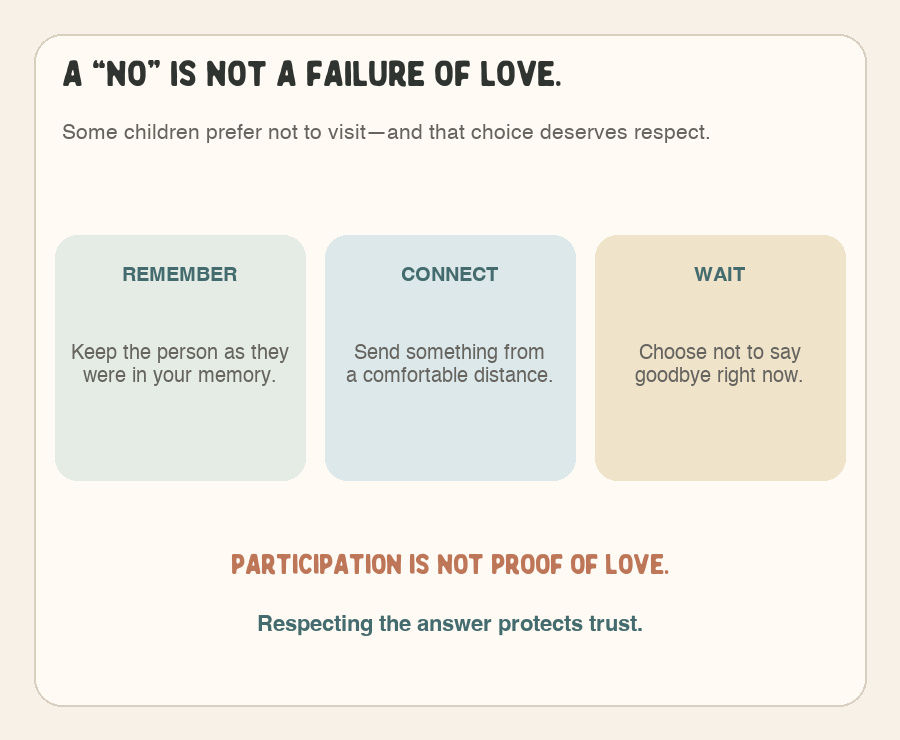
There's no evidence that either choice causes lasting regret on its own. What matters more than which choice is made is whether the child felt it was genuinely their choice, made with honest information, rather than something decided for them without their input or explanation.
If distance or timing makes an in-person goodbye impossible, that's not a failure either. Many families face this reality, and a later ritual — visiting a grave, writing a letter, looking through photos together — can still give a child a meaningful way to mark the goodbye they didn't get to have in the moment.
A child life specialist at the hospital or hospice, if one is available, can offer real-time guidance tailored to the specific situation and the specific child. Every child saying goodbye deserves to do it in a way that feels true to who they are.



Comments