


Supporting a Child Through Serious Illness or Anticipated Loss
Updated: Aug 10
This kind of grief starts before a death happens, and it's often the loneliest kind, because there's no clear moment that gives people permission to talk about it.
Supporting a child through serious illness or anticipated loss starts with naming what's happening, honestly and at their level.
Anticipatory grief is real grief: A child watching a parent, sibling, or grandparent go through a serious illness may already be experiencing sadness, fear, anger, and loss, even while that person is still alive. Naming this for them ("It's okay to feel sad or scared right now, even though [name] is still here") can be enormously validating.

Be honest about the illness, in age-appropriate terms, without over-promising: Avoid guarantees you can't keep ("Everything will be fine," "Grandpa is definitely going to get better"), if the outcome changes, the child may feel misled at the worst possible moment. Instead: "The doctors are doing everything they can. We don't know exactly what's going to happen, but we're going to tell you the truth as we learn more, and we'll take care of you no matter what."

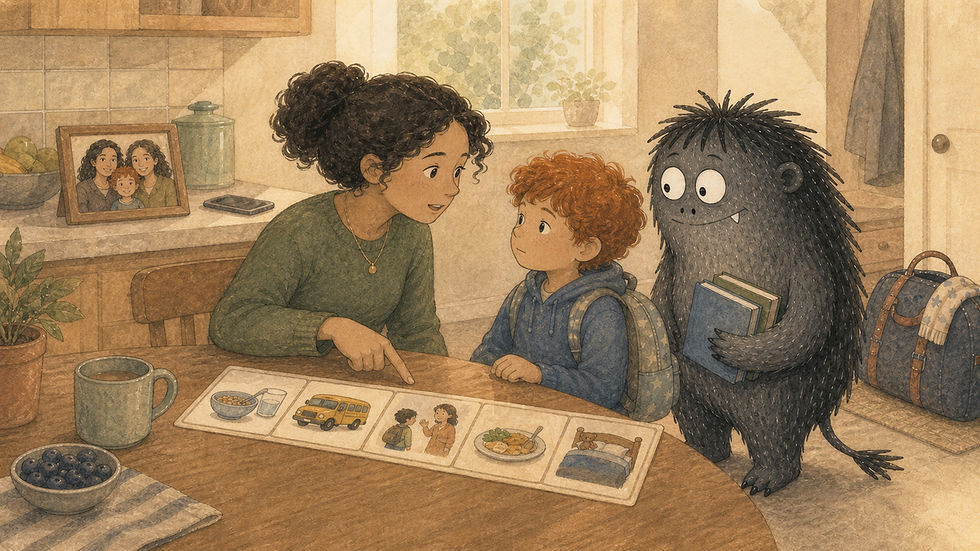
Keep as much of daily life normal as you can: Predictable routines, school, meals, bedtime, give a child a sense of stability when so much else feels uncertain. It's not avoidance to keep some parts of life ordinary; it's often exactly what a child needs.
Watch for the child trying to "take care of" the adults: Kids in these situations often become quietly protective, hiding their own fear or sadness so they don't add to what the adults around them are carrying. Give explicit permission for them to have their own feelings and their own space to express them, separate from managing everyone else's.
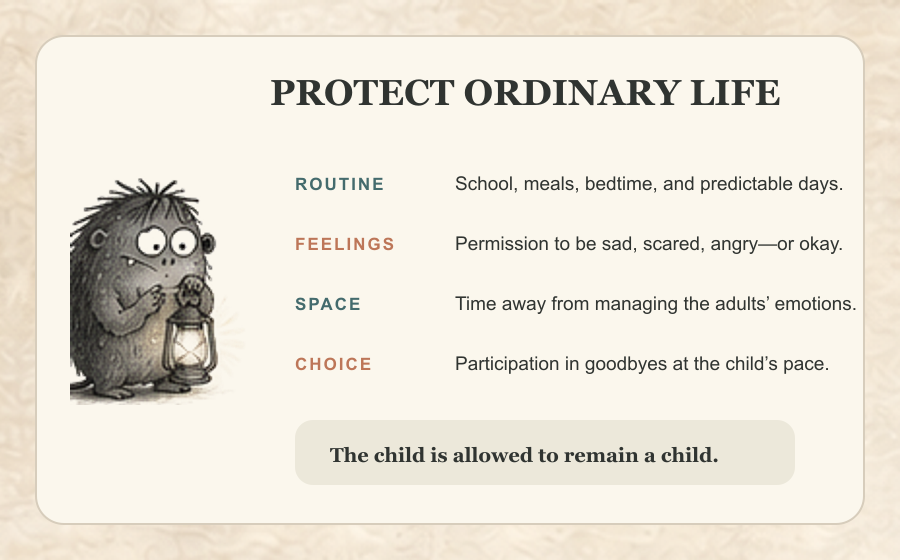
Involve them, at their own pace, in saying goodbye if the illness is terminal: This might mean a visit, a letter, a drawing, or simply being present. Forcing participation rarely helps, but shutting a child out entirely can leave regret. Ask what they want, and follow their lead as much as circumstances allow.
Line up support before and after: A child life specialist (common in children's hospitals), a school counselor, or a grief-informed therapist can help a family navigate this well before the loss occurs, anticipatory grief support isn't just for after the fact.


Comments