


When a Parent or Sibling Is Seriously Ill: Supporting a Child
When a parent or sibling is seriously ill, the ripple effects reach every child in the household, whether or not anyone intends for that to happen. Supporting them well means being honest about what's happening, while protecting them from carrying more than a child should.
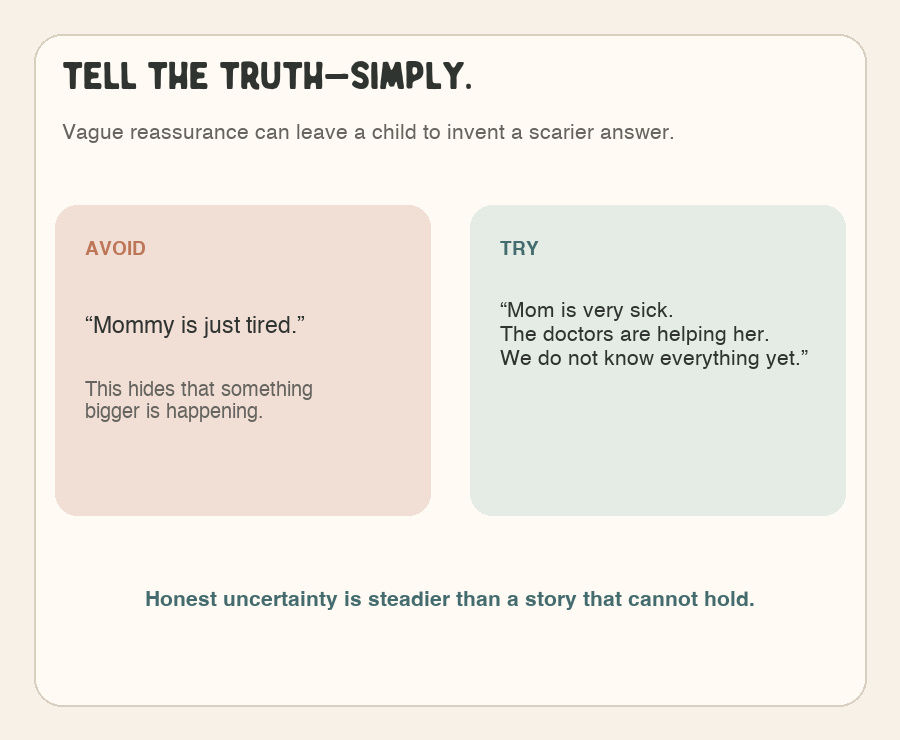
Tell children the truth about the illness, in age-appropriate terms, even when the outcome is uncertain. Vague explanations ("Mommy's just tired" for an extended, serious illness) tend to create more anxiety than clarity, because children sense that something bigger is happening and fill the silence with their own, often scarier, guesses.
Watch for children quietly trying to take care of the adults. It's common for a child in this situation to hide their own fear or sadness so as not to add to what the family is already carrying, or to become unusually responsible, helpful, or "easy" as a way of managing an overwhelming situation. Naming this directly — "You don't have to take care of me. I'm the grown-up here, and it's my job to take care of you" — can relieve a burden the child may not even realize they're carrying.

Protect routine wherever you can. School, meals, extracurriculars, and bedtime may need adjusting around appointments and treatment, but preserving as much predictable structure as possible gives a child a sense of stability that the rest of the situation can't offer.

Give siblings of the ill child their own space and attention, deliberately. When one child requires significant medical attention, siblings can end up feeling invisible by comparison, even while quietly resenting the guilt of feeling that way. Carving out specific one-on-one time, even briefly, communicates that they still matter as much as they did before.

Be honest about what will and won't change day to day. Concrete information — who's picking them up from school, whether they'll still go to their friend's birthday party, what happens if a parent needs to stay overnight at the hospital — often reduces anxiety more than broader reassurances about feelings.
Line up support early rather than waiting for a crisis. School counselors, child life specialists, and family therapists experienced with medical illness can help a family navigate this proactively, and many hospitals have social workers who can connect you with resources before things become more difficult.


Comments