


When Someone Is Missing at a Milestone
Updated: Aug 12
When someone missing at a milestone, the grief can hit unexpectedly hard. Big achievements — a graduation, a championship game, a recital, a driver's license — are exactly the moments a family wants someone to be there for. When that person has died, these milestones can bring an unexpectedly sharp wave of grief, even years after the original loss.
Anticipate the moment rather than being caught off guard by it. If you know a significant milestone is approaching, it can help to name the absence ahead of time: "I know Dad won't be able to be there for your graduation, and that's really hard. I've been thinking about that too." Naming it in advance often softens the blow when the day arrives.

Consider a small way to include the person's memory in the milestone itself. Wearing a piece of their jewelry, carrying a photo, mentioning them in a speech or toast, or simply setting aside a private moment to acknowledge them can give a child a way to include the person without derailing the celebration.

Let the child lead on how much acknowledgment feels right. Some children want the absence named openly and shared with others present; others prefer to keep it private, marked only in their own thoughts. Both are valid, and it's worth checking in rather than assuming.

Expect the grief to arrive alongside genuine pride and joy, not instead of it. A child can feel deeply proud of their accomplishment and deeply sad about who's missing from the audience, in the same hour, sometimes in the same moment. This isn't a sign the milestone is ruined — it's simply what grief and joy sharing space looks like.

Recognize that milestones you didn't anticipate can hit just as hard. Not every significant moment can be planned for; sometimes the resurgence comes unexpectedly, at an event that didn't seem, in advance, like it would carry much emotional weight. Responding with the same patience and openness applies either way.
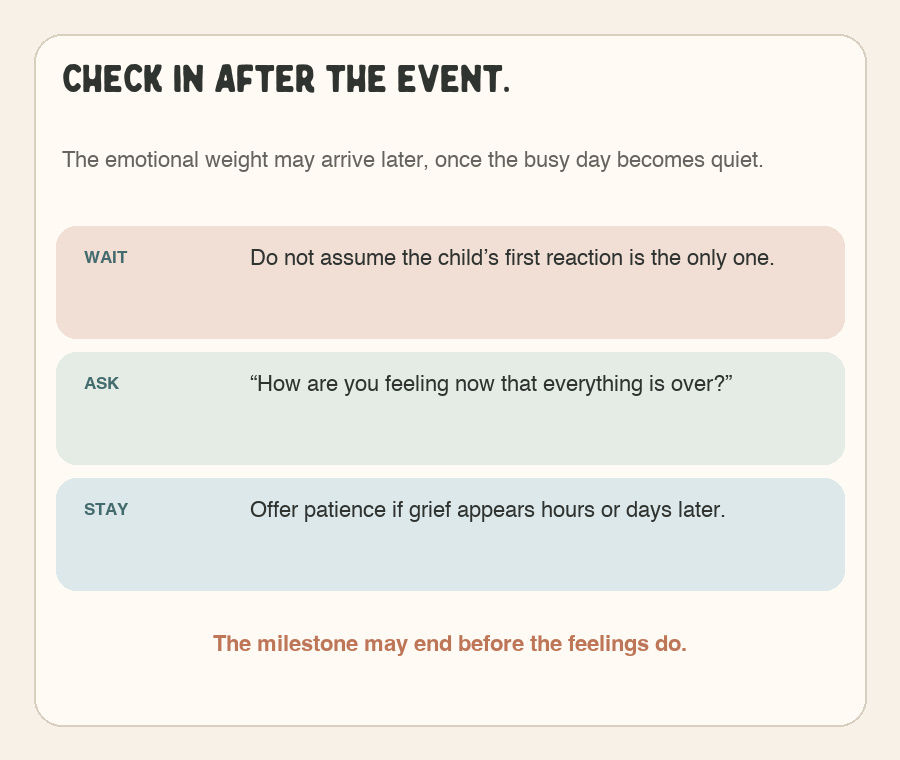
Afterward, it's worth checking in, especially after a milestone you knew would be hard. A brief conversation — "How did today feel, with everything going on?" — gives a child room to name what came up, rather than assuming the moment passed without any impact.


Comments