


A Gentle Gift for a Family Navigating Loss

When a family you care about is grieving, it's natural to want to do something. Especially during the holidays, a gift can feel like a way to say what words can't: I see you. I haven't forgotten. I'm here.
The best gifts for a grieving family aren't about fixing anything. They're about easing a burden, honoring the person who died, or giving children a safe way to hold their feelings.
Gifts that ease the load
Grief is exhausting, and daily life doesn't pause. Practical help is often the most appreciated gift of all.
Meals — a meal delivery gift card, a frozen casserole, or a coordinated meal train. (Ask about allergies and preferences.)
Time — an offer to shovel snow, rake leaves, walk the dog, drive kids to practice, or babysit so parents can rest.
Errand help — grocery delivery credits or a standing offer to pick up prescriptions.
Be specific. "Let me know if you need anything" puts the work on them. "I'd like to bring dinner Tuesday — does 6:00 work?" is a gift.

Gifts that honor the person
A memory book or photo album — gather photos and short stories from friends and family.
A personalized ornament or keepsake with the person's name.
A donation to a cause the person cared about, with a note to the family.
Recorded memories — invite people who knew the person to record short videos or voice memos sharing a story.
Your own memory, written down. A handwritten note sharing a specific story about their loved one may become one of the family's most treasured gifts.
Gifts for grieving children
Children often need tangible ways to express feelings they can't yet name.
A memory box they can decorate and fill with photos and keepsakes.
A soft stuffed animal or comfort blanket.
A journal or drawing pad, with a note that they can use it however they want.
A thoughtful book about feelings and grief, matched to the child's age. (Browse ideas on our Books and Tools page.)
An experience — a movie, a trip to the zoo, or an afternoon of one-on-one time.
What to skip
Cards or gifts with messages like "Everything happens for a reason" or "They're in a better place" — unless you know the family shares that belief.
Advice books about "moving on" or grief "stages."
Anything that asks the family to do work — like assembling, writing thank-you notes, or making plans.
Timing matters
Many families are surrounded by support in the first few weeks, then feel forgotten. A gift or note at the holidays, on the person's birthday, or on the anniversary of their death can mean even more months later.
What to write in the card
"Thinking of you and holding [Name] in my heart this season."
"I'm not sure what to say, but I wanted you to know I'm thinking of you."
"I'll always remember how [Name] ___."
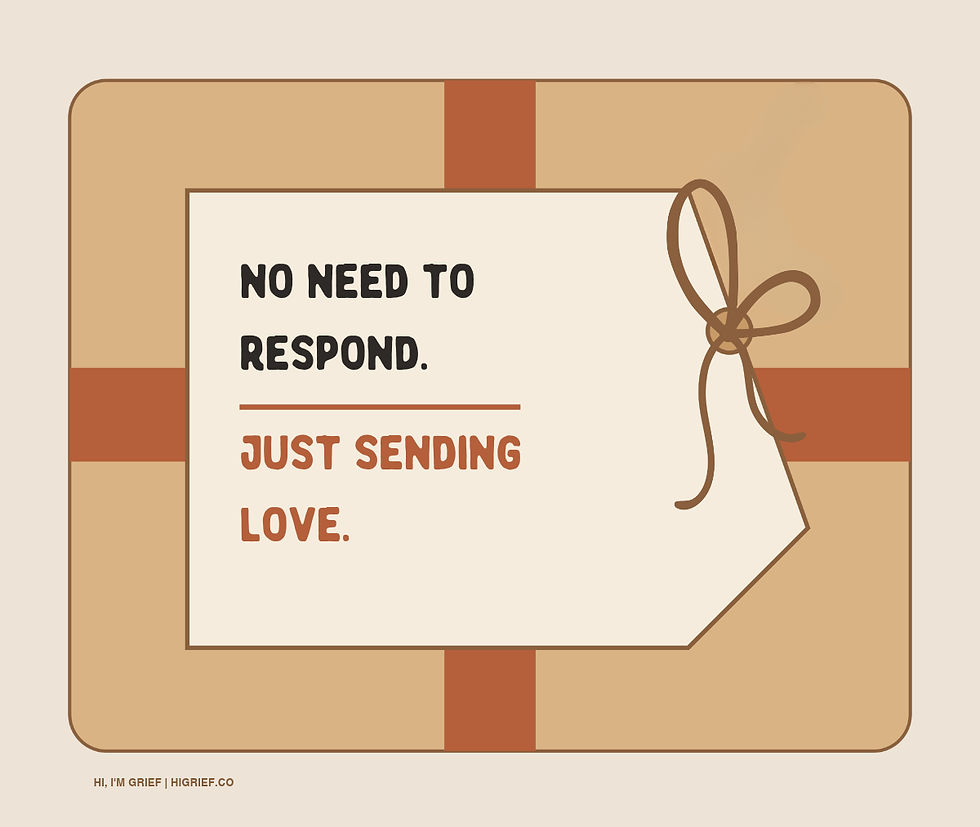
"No need to respond. Just sending love."
The gentlest gift is often the simplest: showing a grieving family that the person they love hasn't been forgotten — and neither have they.
Sources
Dougy Center. Tip sheets for supporting someone who is grieving (including "Someone You Care About is Grieving" and "What to Say Instead"). https://www.dougy.org/resources
Dougy Center. Holidays & Grief. https://www.dougy.org/articles/holidays-grief
American Academy of Pediatrics, HealthyChildren.org. Grief & Loss in Childhood: How to Help Your Child Cope. https://www.healthychildren.org/English/healthy-living/emotional-wellness/Building-Resilience/Pages/Grieving-Whats-Normal-When-to-Worry.aspx


Comments