


How to Explain the Death of a Grandparent to a Young Child
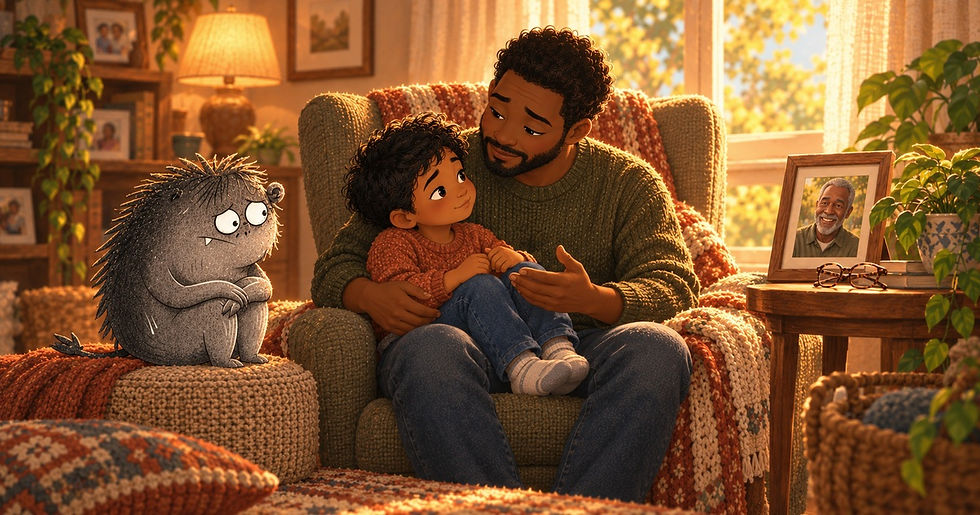
For many children, a grandparent's death is their first experience with the death of a person they love. Grandparents are often a child's special people — the ones with the best snacks, the longest stories, the softest laps. When they die, children may be sad, confused, frightened, or all three.
And often, the adult who has to explain it is grieving their own parent at the same time.
What young children understand about death
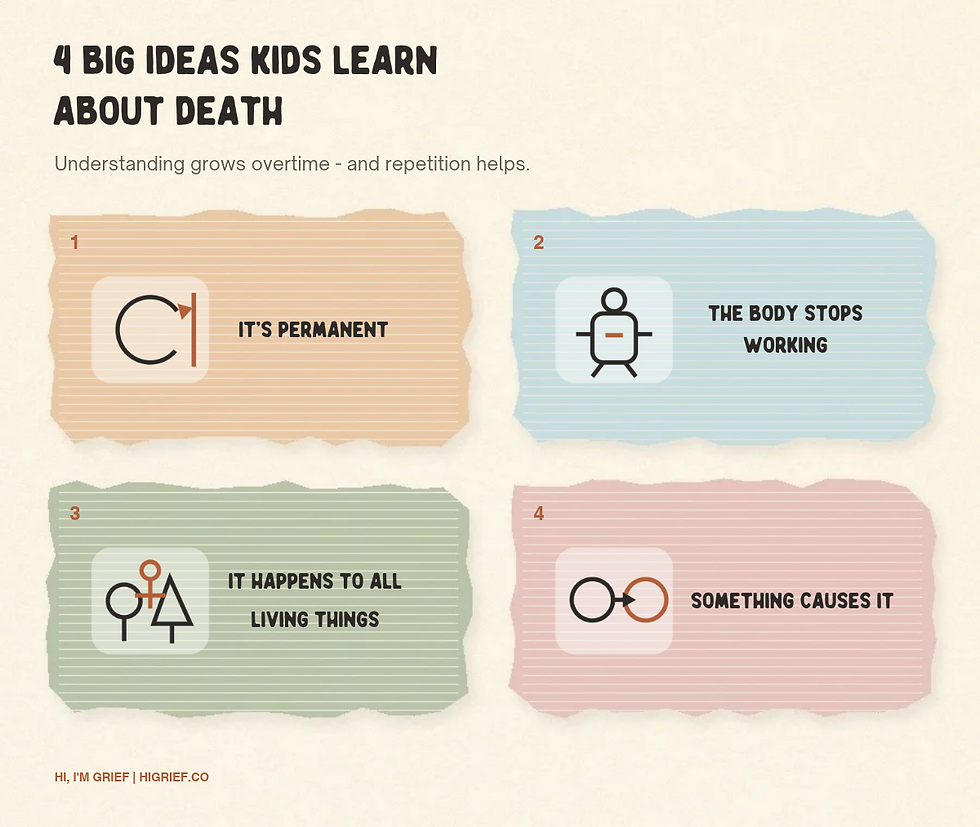
Children usually come to understand four key ideas about death over time, often between ages 5 and 7:
Death is permanent — the person won't come back.
Death means the body stops working — they can't eat, breathe, feel pain, or feel cold.
Death happens to every living thing — eventually.
Death has a cause — something made the body stop working.
Preschoolers may not grasp these yet, which is why they may ask, "When is Grandpa coming back?" or worry that Grandma is cold. That's developmentally normal. Clear, repeated explanations help them build understanding.
How to tell them
Find a quiet moment and tell them soon. Children often sense when something is wrong. Hearing the news from a calm, trusted adult is better than overhearing it.
Use the word "died." "Grandma died last night. Her body stopped working, and she won't be alive anymore. We're very sad." Avoid "went to sleep," "passed," "we lost her," or "went away" — young children take these literally, and they can create fears about sleep or being left.
Give a simple, honest cause. "Grandpa was very, very sick, and the doctors couldn't make his body better." Be careful with phrases like "he got sick," since children may worry that every cold is dangerous. You can add, "Most people get sick and get better. Grandpa's sickness was a very serious kind." If the death was sudden or complicated, share the truth in small, age-appropriate pieces.
Share your own beliefs — and admit what you don't know. If your family has faith or cultural beliefs about what happens after death, share them. It's also okay to say, "People believe different things. I'm not sure. What do you think?"
Reassure them about who takes care of them. Children often worry, "Will you die too?" An honest, comforting answer: "I expect to live a long, long time and take care of you until you're all grown up."
Including children in goodbyes
Children often do better when they're included in rituals like visitations, funerals, or memorials — as long as they're prepared and given a choice. Explain what they'll see, hear, and feel ("Grandma's body will be in a special box called a casket. She'll look like she's sleeping, but she isn't — she's died."). Assign a trusted adult to stay with them and leave if needed. If they'd rather not go, offer another way to say goodbye, like drawing a picture or visiting the grave later.
Helping them remember
Share favorite stories: "Remember how Grandpa always let you win at checkers?"
Make a memory box with photos, a recipe card, a scarf, or a small keepsake.
Cook Grandma's special pancakes together.
Let your child keep something that belonged to their grandparent.
When you're grieving, too

It's okay for your child to see you cry. You might say: "I'm crying because I miss my mom — your Grandma. It's okay to feel sad. We'll feel better little by little." If you need extra support, lean on others. You don't have to carry both your grief and your child's alone. (More in Supporting a Child While You Are Grieving Too.)
When to reach out for more help
Most young children's grief comes in short bursts mixed with play. Talk with your pediatrician or a counselor if fears, clinginess, sleep problems, or regression seem to be growing over several weeks rather than easing.
Your child's grandparent will always be part of their story. With honest words and lots of shared memories, you can help keep that love alive.
Sources
American Academy of Pediatrics, HealthyChildren.org. How Children Understand Death: What to Say When a Loved One Dies. https://www.healthychildren.org/English/healthy-living/emotional-wellness/Building-Resilience/Pages/How-Children-Understand-Death-What-You-Should-Say.aspx
Dougy Center. Supporting Children & Teens When an Extended Family Member Dies (tip sheet). https://www.dougy.org/assets/uploads/Supporting-Children-Teens-When-an-Extended-Family-Member-Dies-2.0.pdf
American Academy of Pediatrics. Supporting the Grieving Child and Family (Clinical Report, 2024). https://publications.aap.org/pediatrics/article/154/1/e2024067212/197497/Supporting-the-Grieving-Child-and-Family-Clinical
National Center for School Crisis and Bereavement. Help Now: Guides for families after a loved one dies. https://www.schoolcrisiscenter.org/help-now/


Comments