


Should Children Attend Funerals or Memorial Services?
Updated: Sep 17
This is one of the most common questions caregivers ask, and researchers and grief specialists are consistent on one point: there is no universal right answer. What matters is the individual child, the individual service, and the individual relationship to the person who died.

Ask the child, and weigh their answer seriously. If a child is old enough to express a preference — often from around age six or seven, though this varies — that preference should carry real weight in the decision. A child who wants to go and is excluded can feel shut out of something important; a child who doesn't want to go and is pressured to attend can end up frightened or resentful of the whole occasion.
Consider what the specific service will involve. An open casket, a long or highly emotional service, cremation-related visuals, or a large unfamiliar crowd are all factors worth thinking through honestly, separate from the more general question of whether funerals are "good" or "bad" for children. A shorter, more contained memorial service may be an easier first experience with this kind of ritual than a lengthy, viewing-heavy funeral.
There's no evidence that attending is harmful when a child is prepared. Research and clinical guidance consistently find that children who attend a funeral after being told what to expect do not fare worse than children who don't attend — and some benefit from having a concrete way to say goodbye and see that the ritual, while sad, is orderly and survivable.

There's also no evidence that skipping it causes lasting harm. A child who doesn't attend, whether by their own choice or a caregiver's judgment call, isn't missing a required developmental step. Alternative ways to mark the loss — visiting the grave later, looking at photos together, writing a letter, attending only the reception — can meet the same emotional need on a different timeline.

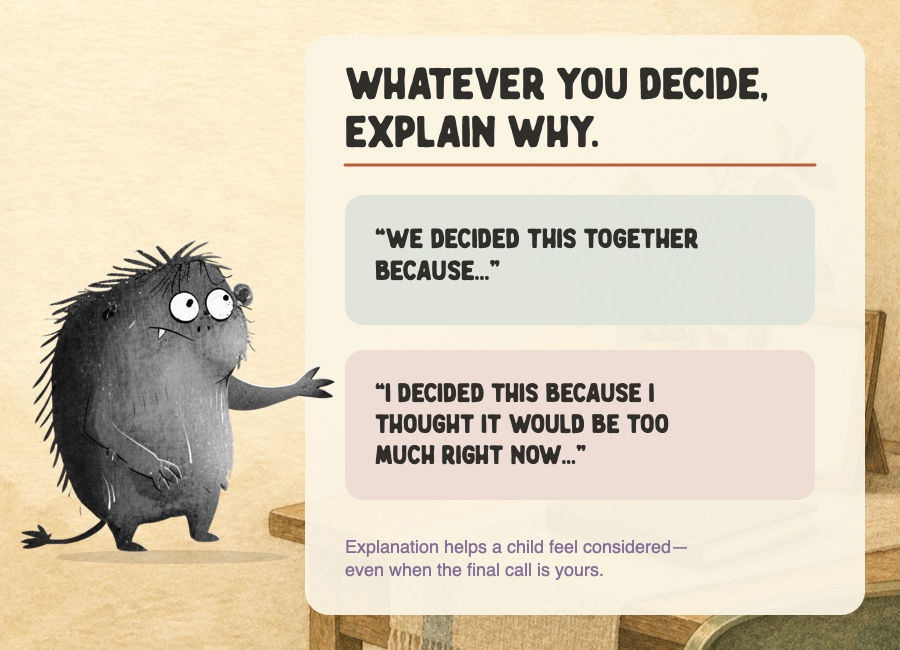
Whatever you decide, explain the reasoning to the child in age-appropriate terms. "We decided this together because..." or "I decided this because I thought it would be too much right now, and here's why" helps a child feel like a considered person in the decision, even when the final call wasn't entirely theirs.
If you decide a child will attend, our companion guide, "A Child-Friendly Guide to What Happens at a Funeral," walks through how to prepare them for the day itself. And if a child seems unusually anxious about the decision either way, a school counselor or grief-informed therapist can help think it through with you.



Comments