


The Empty Chair at Thanksgiving: How to Talk About Who's Missing

Thanksgiving is built around a table. And after someone dies, that table can feel impossibly different. The seat where Grandpa carved the turkey. The chair where a sibling always sat. The voice that used to lead the prayer or tell the same funny story every year.
Children notice the empty chair. The question isn't whether they'll feel the absence — it's whether they'll feel allowed to talk about it.
Talk about it before the day arrives. Anticipation can be harder than the holiday itself. A few days ahead, bring it up gently: "Thanksgiving is going to feel different without Aunt Maria. What do you think about that?" Let children share worries, wishes, and ideas.
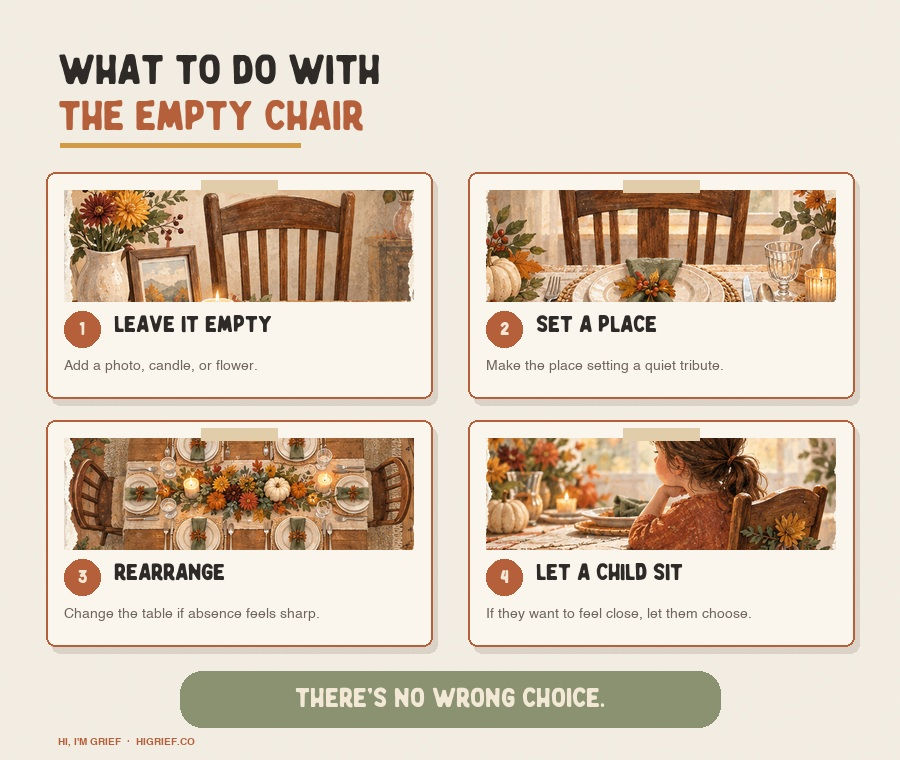
Decide together what to do with the chair. There's no right answer. Some families:
Leave the seat empty on purpose, with a photo, candle, or flower.
Set a full place as a quiet tribute.
Rearrange the table entirely so the absence feels less sharp.
Invite a child to sit in the special seat if they want to feel close.
Ask your child what feels right. Their answer may surprise you.
Say their name at the table. Many families worry that mentioning the person will "ruin" the day. Often, the opposite is true. Children feel relief when someone finally says what everyone is thinking. A simple toast works: "We miss Grandma today. Let's each share a favorite memory of her."
Give children a job in remembering. Kids might make a place card for the person, cook their favorite side dish, choose a song they loved, or write a note to add to a memory jar. Having something to do with grief can be comforting.
Prepare them for what relatives might say. Relatives mean well, but children may hear things like "You're the man of the house now," "She's in a better place," or "At least you still have your mom." Talk ahead of time about how they can respond — or that they can simply say "Thank you" and come find you.
Create an exit plan. Big gatherings are loud, long, and full of emotion. Agree on a signal your child can
use if they need a break, and a quiet space where they can go — a bedroom, a walk outside, a car ride to the store.
Let feelings come and go. A child might cry during the toast and then laugh through the football game. That's normal. Joy doesn't mean they've forgotten, and sadness doesn't mean the day is ruined.
Keep it simple if you need to. It's okay to scale back, skip traditions, eat takeout, or spend the day with a smaller group. Your family gets to decide what Thanksgiving looks like this year.
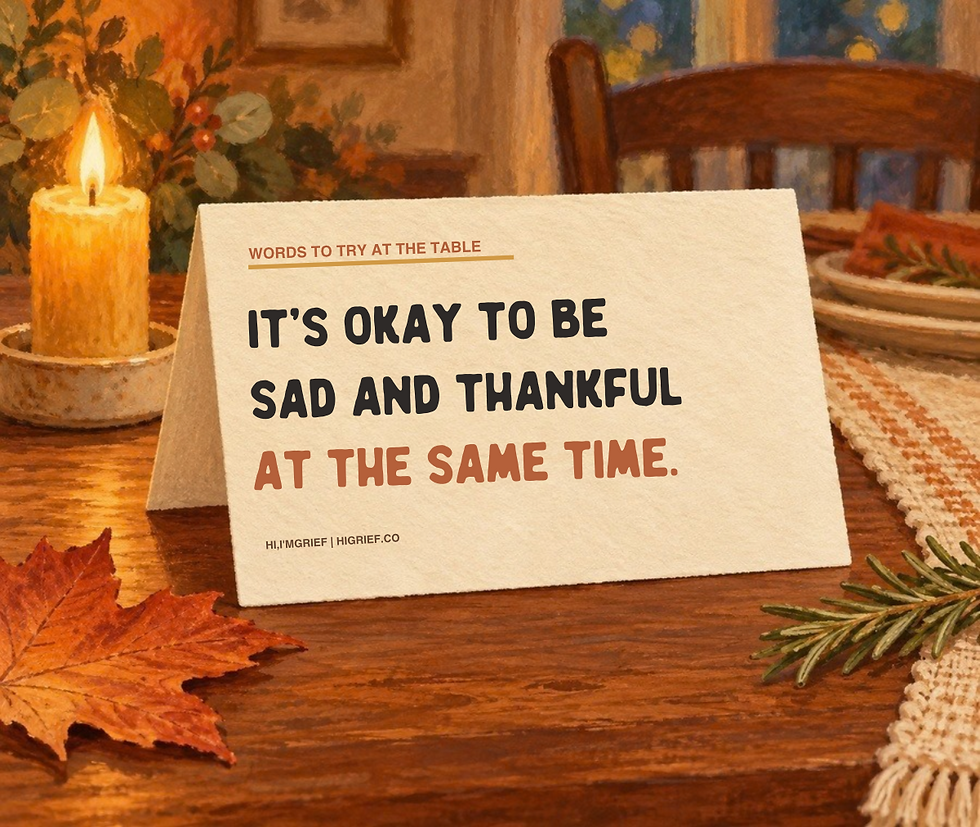
Words to try at the table
We're so thankful we got to have Grandpa in our family."
"It's okay to be sad and thankful at the same time."
"If you need a break, just give me the signal."
It's not only the first year
Many families expect the first holiday to be hard and are surprised when later years bring their own waves. Grief can resurface with new ages and understanding. (See Why Grief Can Return Months or Years Later.)
The empty chair will always be part of your family's Thanksgiving story. When we make room to talk about it, it can become a place of remembering, not just of missing.
Sources
Dougy Center. Holidays & Grief (tips and Holiday Plan Worksheet). https://www.dougy.org/articles/holidays-grief
Dougy Center. Tips for supporting kids and teens who are grieving during the winter holidays. https://www.dougy.org/articles/tips-for-supporting-kids-and-teens-who-are-grieving-during-the-winter-holidays
American Academy of Pediatrics, HealthyChildren.org. Grief & Loss in Childhood: How to Help Your Child Cope. https://www.healthychildren.org/English/healthy-living/emotional-wellness/Building-Resilience/Pages/Grieving-Whats-Normal-When-to-Worry.aspx


Comments